





What is a Paper Recycling Business in India?
A paper recycling business in India collects waste paper from offices, commercial complexes, packaging units and door-to-door networks, then processes it through pulping, deinking and sheet-formation lines to produce recovered fibre that paper mills and packaging converters re-spin into cartons, kraft sacks, newsprint or testliner. The economics rest on a simple arbitrage: collect mixed paper waste at ₹4-12 per kg from the informal supply chain and sell graded recovered fibre to organised paper mills at ₹14-28 per kg. The operating model only holds together when the operator nails three things — input grade discipline, contamination control during pulping, and consistent offtake contracts with two or three anchor mills.
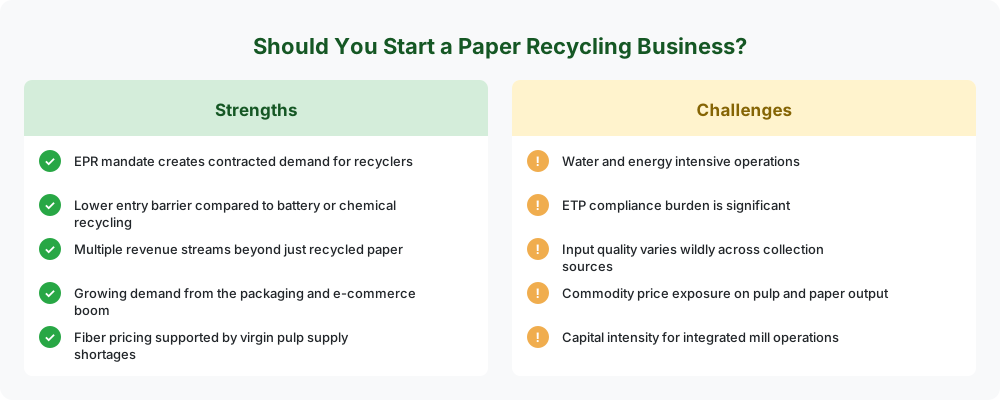
India consumes roughly 22-23 million tonnes of paper and paperboard a year and the recycled-fibre share inside domestic mills sits between 55% and 70% depending on the sub-segment. Packaging paper is overwhelmingly recovered-fibre-based; writing-and-printing grades still lean on virgin pulp. That mix is the structural reason a paper recycling business is profitable in the packaging-feed segment but margin-tight in the writing-paper feed segment.
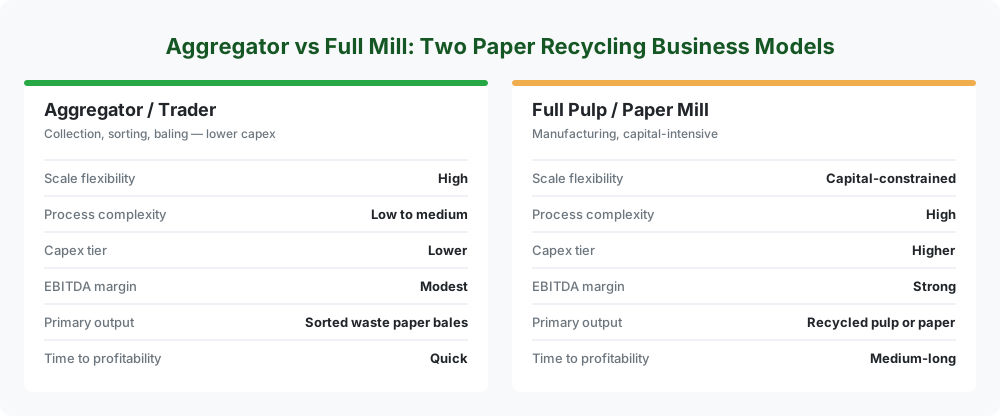
The unit economics differ sharply from a generic scrap trade. A scrap dealer flips kabadiwala collections to a mill aggregator at a 5-10% markup. A serious operator captures the 30-50% spread between mixed-waste paper at the door and graded recovered fibre at the mill gate, but only by adding sorting, baling, weighing-and-grading discipline and in some configurations primary pulping. The capital required scales with how far down that value chain the operator goes.
Three structural tailwinds make this attractive for serious operators in 2026:
- Domestic recovery rate is still only 30-35%, well below China’s 50%+ and the EU’s 70%+. Each percentage point of national improvement adds 220,000-230,000 tonnes a year of recoverable feedstock.
- EPR for plastic packaging has pushed brand owners to substitute paper-based formats — kraft tape, paper carry-bags, paperboard inserts — which expands the addressable pool of post-consumer paper.
- Mill expansion plans at ITC PSPD, JK Paper, West Coast Paper and Century Paperboards together add 1.5-2 million tonnes of recovered-fibre demand by 2028.
This guide treats the paper recycling business as what it actually is — a manufacturing-and-logistics operation hybridised with a regional commodity trading desk. Get either side wrong and the plant runs at 30-40% utilisation and bleeds working capital. Get both right and a 25-50 TPD plant returns ₹3-5 crore EBITDA at 20-25% margins. The circular economy framing matters for grant access and CSR positioning, but the day-to-day discipline is straight operational.
Market Potential and Demand for Paper Recycling in India
The Indian paper-and-paperboard market is on track for ₹95,000-1,10,000 crore by 2028, growing at 6-7% CAGR — and the recycled-fibre input share inside that market is the segment with the steepest tailwind. Packaging end-uses now drive roughly 55% of total paper demand in India, and packaging is structurally a recovered-fibre game: testliner, kraft and corrugating medium together pull more than 80% of their pulp from recovered paper, not virgin wood.
What this means for anyone planning a paper recycling business in this market — the demand side is not the constraint. The mills will buy every grade-A recovered bale you can deliver. The constraint is supply discipline: consistent moisture (below 10%), low contamination (below 2% non-paper), and a stable grade mix. Most new entrants underestimate this and get rejected at the mill gate, which is the most expensive thing that can happen to a load of waste paper.
The macro structure of waste paper recycling in India sits along three feed routes:
- Domestic post-consumer collection via kabadiwalas, RWAs, offices and commercial complexes — roughly 4-5 million tonnes a year. Pricing is volatile, contamination is high, but margins for a well-organised aggregator are 25-35%.
- Domestic industrial waste paper — printer offcuts, converter trims, OBC (old box cuttings) from packaging plants. Volumes 2-3 million tonnes annually. Pricing is stable through long-term contracts with FMCG and e-commerce converters; margins tighter at 15-20% but cashflow predictable.
- Imported recovered paper — India imports 6-7 million tonnes a year, mostly from the US, UK, Japan and the EU. This is where most ITC, JK and Century paper mills source their high-grade OCC and ledger feeds. Industry data published by the Indian Paper Manufacturers Association industry briefings tracks year-on-year import volumes and pricing trends across grades.
The structural opportunity for a new operator sits inside the first two pools. Import is mill-controlled (large CIF contracts, port-side warehousing) and outside the reach of a sub-100-TPD setup. But the domestic post-consumer pool is profoundly under-organised: roughly 70-75% of it still flows through three- to four-tier informal aggregation, with each tier shaving 10-15% margin. An operator who builds a direct corporate-and-RWA collection network can compress two of those tiers and capture 20-25% extra margin on the same tonnage. Waste paper recycling in india has rewarded organised aggregators in every region where one set up the discipline first.
Operators looking to size the market more rigorously — formal versus informal share, mill-wise recovered-fibre dependency, projected supply gap through 2030, region-by-region recovery rates — can find detailed industry intelligence on the Indian paper sector covering TAM modelling, recovered-fibre share, mill imports versus domestic collection, and projected CAGR through 2030 on Adhara Viveka. That sort of structured market view is what you’d want before deciding TPD capacity or anchor catchment.
A reasonable thumb-rule on capacity sizing for a new paper recycling business: in a metro catchment with 8-12 million population and an active industrial belt within 50 km, you can comfortably feed a 25-30 TPD recycled paper line through purely domestic post-consumer and industrial flows without leaning on imports. Tier-2 cities support 5-15 TPD; below 5 TPD the unit economics get punishing because fixed costs (registration, weighing, baling, two-shift labour) don’t scale down proportionally.
Investment and Setup Cost for a Paper Recycling Plant
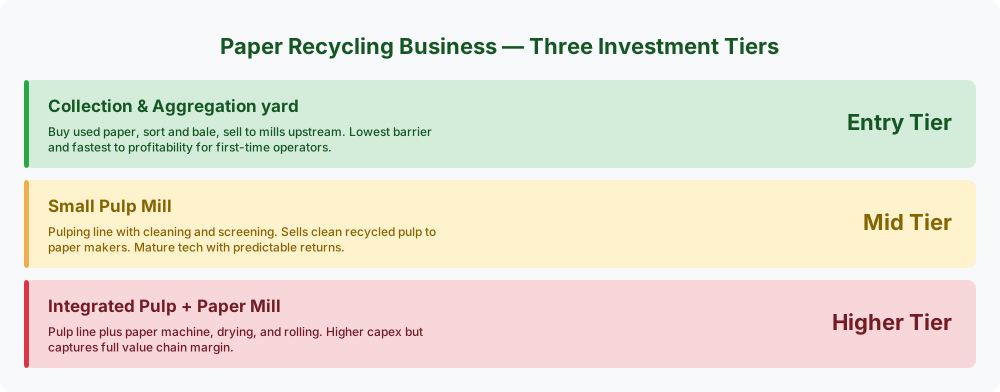
Capex for a paper recycling plant in India ranges from ₹40-60 lakh for a 1-2 TPD pilot operation up to ₹15-25 crore for a 100 TPD integrated mill with deinking and sheet formation. The bulk of paper recycling machinery cost concentrates in two line items: the pulper plus stock-preparation train (40-55% of total machinery spend) and the dewatering, drying and reeling section (25-35%). Civil works, utilities and weighing-and-baling infrastructure absorb the remaining 15-25%.
Most first-time operators dramatically under-budget working capital. Paper recycling plant cost guides that circulate online cover only equipment and civil; they miss that a 25 TPD plant needs ₹1.5-2.5 crore in working capital just to fund 60-90 days of waste-paper inventory plus 30-45 days of mill receivables. Skip this and the paper recycling business operates at half-capacity through the first two quarters waiting for cashflow to free up. The breakdowns and capacity-vs-cost matrix in the sub-sections below give you the realistic numbers to plan against.
Paper Recycling Plant Cost in India: Capex, Opex and Payback
Break a paper recycling plant cost into five line items and the picture gets honest. The numbers below assume a 25 TPD recycled kraft/testliner line operating two shifts a day at 80% utilisation, set up in an industrial estate within 50 km of a Tier-1 or Tier-2 city. Scale up or down within the band depending on capacity.
- Land and civil works: ₹80 lakh – ₹1.5 crore. Industrial-plot rates run ₹2,500-6,000 per sq.m in MIDC, GIDC, KIADB or equivalent state-board estates. Plan 4,000-6,000 sq.m for a 25 TPD layout — pulper + stock-prep, paper machine line, baling and storage shed, weighbridge, ETP, admin block. Pre-engineered shed at ₹1,800-2,400 per sq.ft is the standard build.
- Core machinery (pulper, screens, refiner): ₹1.5-2.5 crore. Indian OEMs (Parason, Voith India, Andritz India, Naina Paper Machinery) supply complete trains at this price band. Imported lines from China and Taiwan come in 25-35% cheaper but spares lead times stretch to 8-12 weeks.
- Paper machine, dryers and reeler: ₹1.2-2.2 crore. A 2-2.4 metre deckle Fourdrinier or Cylinder Mould machine sized for 25 TPD output. Imported second-hand European machines (often 1990s-2000s vintage, refurbished) compete well at ₹70 lakh-1.2 crore.
- Utilities and balance of plant: ₹70 lakh-1.2 crore. ETP/STP, water reservoir, steam boiler (biomass or coal-fired typically), DG backup 250-500 kVA, compressed air, fire-safety. The ETP itself runs ₹35-55 lakh and is a CPCB consent prerequisite.
- Working capital: ₹1.5-2.5 crore. Funded 70-80% through bank CC limits if pre-arranged. Without it, mill payments at 30-45 days against waste-paper procurement at 7-15 days creates a perpetual cash crunch.
Total realistic paper recycling plant cost for a 25 TPD operation therefore lands at ₹6-10 crore inclusive of working capital, with ₹1-1.5 crore additional buffer for pre-operative expenses (consents, registrations, trial runs). The wider context of how a paper recycling plant sits inside the Indian waste-sector economy is set out in our overview of waste management in India, which covers sector-wide flows that affect feedstock pricing and offtake.
Payback at this capex tier is typically 3.5-5 years on a well-utilised plant. A poorly sited or under-utilised plant pushes payback to 7+ years — at which point the operator usually exits or sells to a mill. The single biggest swing factor is utilisation: 80% versus 60% changes EBITDA by 40-50%, far more than equipment price differences.
Capacity-vs-Cost Comparison: 5 / 25 / 100 TPD Plants
The capex curve for a paper recycling plant is non-linear: doubling capacity from 5 to 25 TPD costs 3-3.5x, but moving from 25 to 100 TPD costs only another 2.5-3x because the paper machine itself is the lumpiest fixed cost and amortises better at scale. The table below gives a planning-grade snapshot across three common operator archetypes.
| Capacity (TPD) | Land + Building (INR cr) | Machinery (INR cr) | Working Capital (INR cr) | Total Capex (INR cr) | Payback (years) |
|---|---|---|---|---|---|
| 5 TPD pilot | 0.4-0.6 | 0.8-1.2 | 0.3-0.5 | 1.5-2.3 | 4-6 |
| 25 TPD mid-scale | 1.0-1.5 | 3.0-4.5 | 1.5-2.5 | 5.5-8.5 | 3.5-5 |
| 100 TPD integrated | 3.0-4.5 | 10-14 | 4-6 | 17-24.5 | 3.5-4.5 |
Reading the table: machinery cost dominates from 25 TPD upward (55-60% of total capex), and paper recycling machinery cost at the 100 TPD tier is where Indian-versus-imported decisions actually matter — every 10% saving on a ₹10-14 crore line is worth ₹1-1.4 crore. At 5 TPD that same percentage saving is ₹8-12 lakh, often not worth the imported-spares headache.
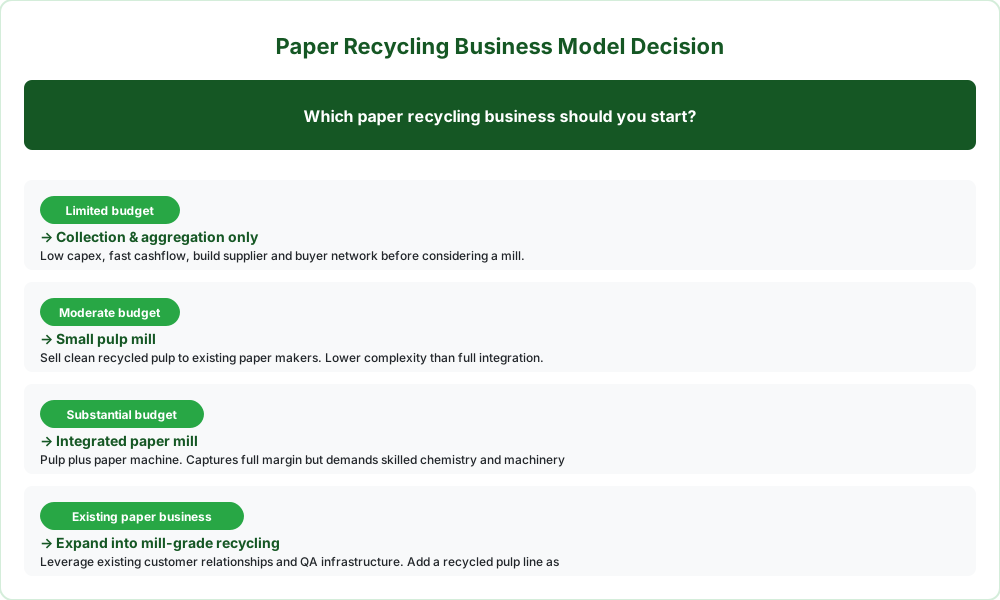
Note that the 5 TPD pilot tier is structurally hard to make profitable in current Indian conditions. It’s better treated as a learning-curve investment for an operator planning to expand to 25 TPD within 18-24 months than as an end-state business. The 25 TPD tier is the sweet spot for first-time operators who have raised ₹8-10 crore and can secure mill offtake before commissioning.
Licences and Legal Requirements for a Paper Recycling Business
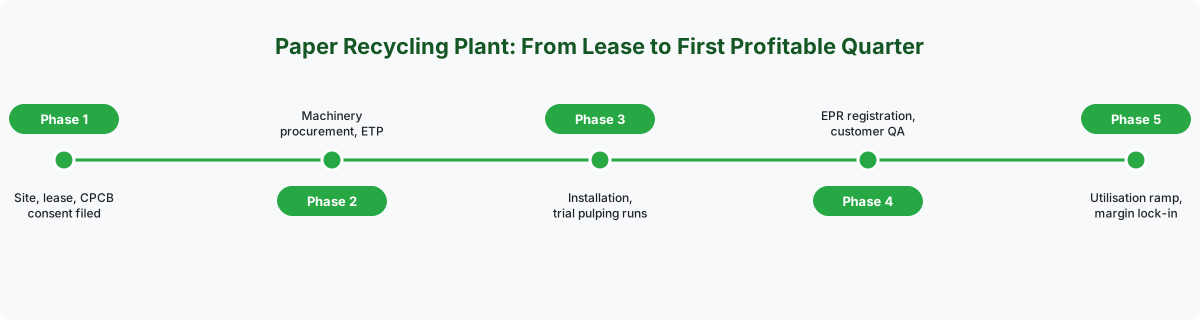
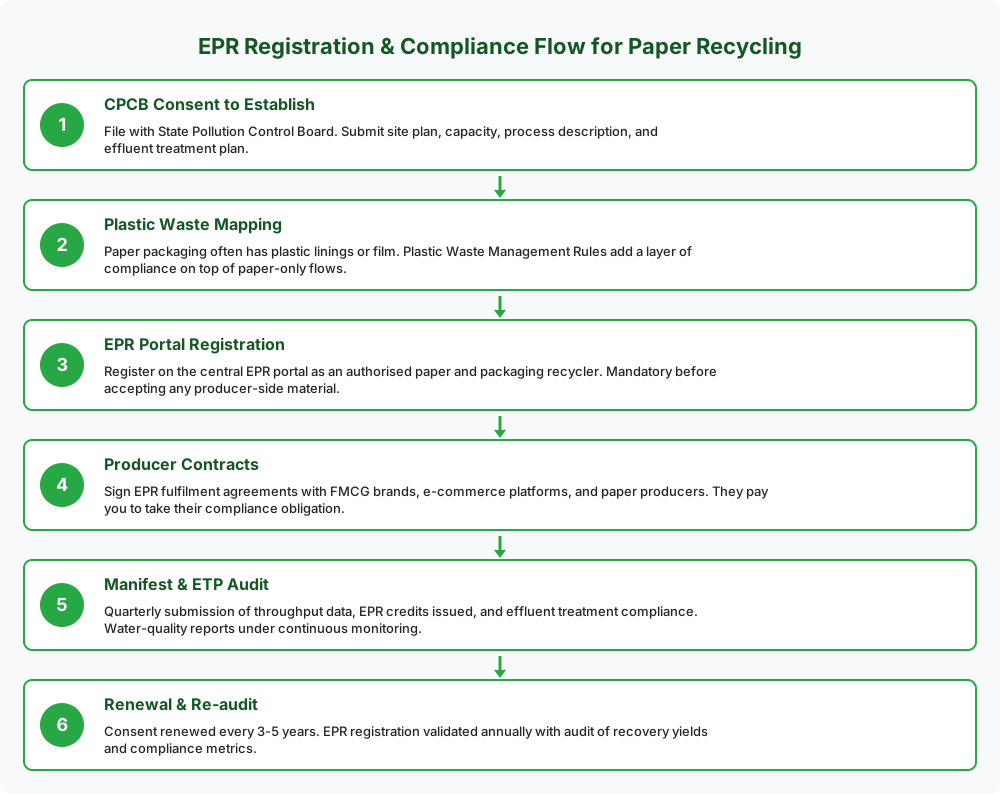
A paper recycling business in India needs four core approvals before commissioning, with two further registrations becoming important as operations scale: Consent to Establish and Consent to Operate from the State Pollution Control Board, factory registration under the Factories Act, GST registration, plus optional but valuable EPR (paper packaging) registration and BIS marking on output grades. Total elapsed time from clean-slate application to operating consent is realistically 5-8 months for a 25 TPD unit, longer if the site lacks ETP-suitable drainage or sits inside a sensitive ecological zone.
The licence stack for a paper recycling business breaks into four tiers:
- State Pollution Control Board (SPCB) Consent to Establish and Consent to Operate: issued under the Water Act 1974 and Air Act 1981. This is the binding regulatory gate. Application requires plant layout, ETP design, sludge-handling plan, raw-material and product flow, water-balance statement, air-emission projection from boiler stacks. Fee 25,000-2,50,000 depending on capacity and state. CTO is renewed every 1-5 years.
- Factories Act registration: mandatory once 10+ workers are employed with power or 20+ without power. The Chief Inspector of Factories issues the licence after a safety, sanitation and welfare-amenities inspection.
- GST and trade-licence registration: GST is mandatory above the ₹40-lakh turnover threshold. Municipal trade licence required for the physical premises. Both routine.
- EPR registration on the CPCB portal: for paper packaging under the broader EPR framework — useful for selling recovered fibre into FMCG and e-commerce brand-owner offtake at premium rates. Not yet mandatory the way plastic EPR is, but most large mills now prefer EPR-registered suppliers.
CPCB consent norms for paper-and-pulp manufacturing units are the single most determinative factor in plant siting and ETP design. Operators should read the CPCB consent norms for paper-and-pulp manufacturing units directly — the effluent discharge standards (TSS, COD, BOD, AOX), water-consumption norms (per tonne of paper produced), and stack-emission limits are codified there and any pre-feasibility cost projection that ignores them is unreliable. CPCB requires zero-liquid-discharge configurations in water-stressed states (Rajasthan, parts of Maharashtra, Tamil Nadu, Telangana) — that adds ₹50-90 lakh to ETP capex.
The licence rhythm itself is non-trivial. An operator who has been through it for an adjacent waste stream — say, the parallel licence process for an e-waste recycling business — will recognise the pattern: incomplete file gets returned, surveyor inspection gets postponed, and you spend two months chasing a single drawing revision. Plan for it. Most first-time entrants budget 60-90 days for the entire stack and end up six months in. Hire a CPCB-experienced consultant — costs ₹1.5-3.5 lakh inclusive of all four approvals — and the timeline compresses materially. Effective waste management compliance from day one keeps the SPCB inspector friendly and saves three to four months of escalating back-and-forth.
Two cautionary notes for a paper recycling business at this stage. First, do not commission the boiler or pulping line under “trial run” allowance without explicit Consent to Operate — SPCBs have prosecuted operators for this, and remediation is far more expensive than waiting. Second, paper-mill ETP sludge is classified as solid waste; sludge disposal goes through CPCB-authorised TSDFs and must be documented in the manifest system. Skipping the documentation is a routine SPCB audit failure.
Raw Material Sourcing for a Paper Recycling Business
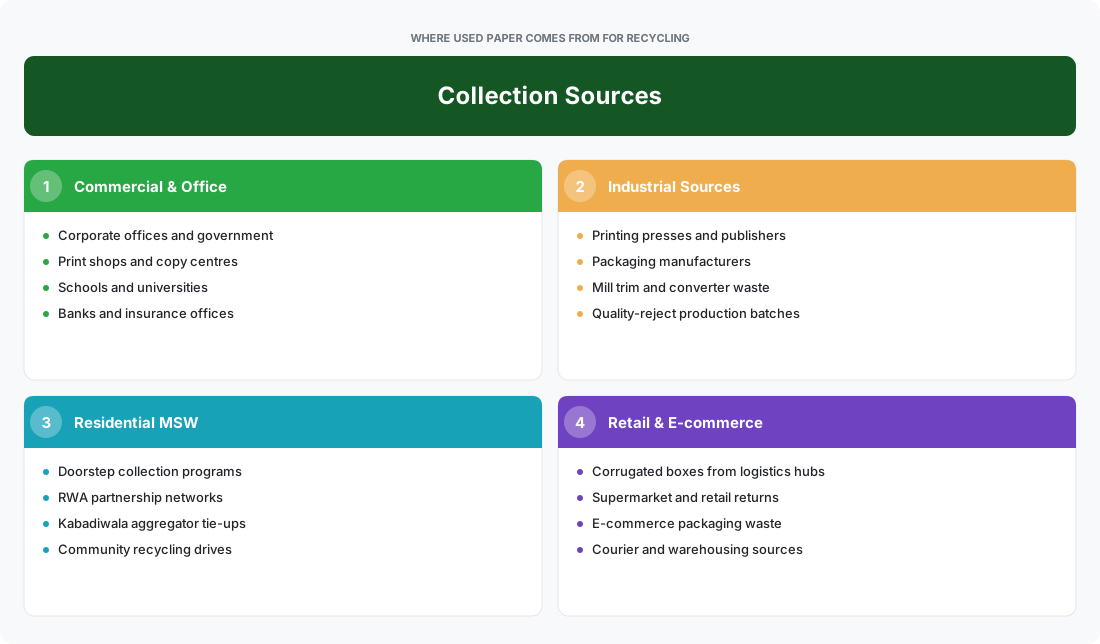
Raw-material procurement is where 60-70% of a paper recycling business succeeds or fails — not on the shop floor. A 25 TPD plant needs 30-35 tonnes per day of input (allowing for 15% process loss and rejection), which translates to ~10,000 tonnes a year of consistent, graded waste paper. Procurement strategy must balance three feed streams with different price, quality and reliability profiles.
The standard waste paper collection mix for a 25 TPD plant looks like this: 45-55% from corporate-and-RWA contracts (low price, low contamination, high reliability), 30-40% from kabadiwala and aggregator chains (medium price, variable contamination, high volume), and 10-15% from direct industrial offcuts (medium price, very low contamination, contract-locked). Waste paper recycling in india is structurally an under-organised supply chain — the operator who professionalises 2-3 anchor catchments captures durable margin.
The procurement discipline that separates a profitable paper recycling business from one that struggles is the same as the analogous waste-stream procurement playbook used by plastic recycling operators in India: anchor contracts first, opportunistic spot procurement second, and a hard rule never to accept un-weighed, un-graded material from a new supplier. Specific source channels, current pricing per grade and agro-fibre alternatives are laid out in the sub-sections.
Waste Paper Suppliers in India: Grades and Procurement Channels
Waste paper suppliers in India operate across five widely recognised grade categories that mills price differently. Getting the grading discipline right at the procurement gate is what separates a serious aggregator from a generic scrap dealer — and what determines whether the mill accepts the load or rejects it at the gate.
| Grade Code | Description | Indicative Price (INR/kg) | Primary Source |
|---|---|---|---|
| ONP | Old Newspapers — clean, deinkable | 12-15 | Residential collection, RWA tie-ups, news-vendor returns |
| OMG | Old Magazines — coated, mid-grade | 8-10 | RWA collection, retail-chain trims |
| OCC / Kraft | Old Corrugated Containers, kraft cartons | 14-18 | Warehouses, e-commerce DCs, retail back-rooms |
| SOP / White Ledger | Sorted office paper, white printer waste | 15-22 | Corporate offices, IT campuses, document shredders |
| Mixed waste paper | Unsorted residential / municipal | 5-8 | Kabadiwala door-to-door collection, ULB tie-ups |
Three procurement channel archetypes account for almost all volume sourced by organised waste paper recycling in india operators:
- Direct corporate contracts (15-25 anchors): IT campuses, BPOs, banks, FMCG offices, schools. A monthly buy-back rate fixed for 6-12 months. Volumes 500-3,000 kg per anchor per month. The waste paper collection logistics here are the discipline-test — branded collection bins, scheduled pickup (twice weekly), weighing at the source, signed manifests. Operators who skip the manifest discipline lose anchors within 6-9 months when the corporate auditor flags missing documentation.
- Aggregator and kabadiwala networks (40-80 contacts): the workhorse of volume. A trusted aggregator delivers 2-8 tonnes a week, mostly mixed and OCC, and bills weekly. Pricing floats with mill rates. Operators must run weekly cross-checks on aggregator delivery weights versus daily yard intake — discrepancies of 3-5% are routine, 8%+ signals systemic short-weighing and needs correction.
- Industrial offcut contracts (3-8 anchors): packaging converters, corrugating plants, printers. These produce clean, single-grade trim and OBC in bulk. Pricing is the highest-stable tier in the market because the source is itself a downstream customer. Contracts are 12-24 months and renewals are competitive.
The most common failure mode of new waste paper suppliers in india is over-reliance on kabadiwala spot procurement. It works for the first quarter while you’re testing the line, but the moment another buyer offers ₹0.50 more per kg, your aggregator pivots overnight. Without contracted corporate and industrial anchors, the plant runs at unpredictable utilisation. Build the contracted base in months 1-6, even at the cost of slightly worse pricing in the short term.
Agro Waste Paper Business: Bagasse, Wheat and Rice Straw as Alternative Fibre
The agro waste paper business represents the second-largest non-wood fibre route in India — between 12% and 17% of total mill pulp input depending on the year — and for a paper recycling business operator it matters in two specific ways: as a contamination check (agro fibres bypass the deinking line and don’t compete with recovered paper feed) and as a co-feed option when recovered paper prices spike during monsoon-disrupted collection seasons.
Three agro residues account for almost all volume:
- Bagasse: sugarcane crushing residue, the dominant agro-fibre route in India. Sourced directly from sugar mills in Uttar Pradesh, Maharashtra and Karnataka at ₹2.5-4 per kg dry. Pulps into a strong, short-fibre stock — used for writing paper and tissue grades. Most of the 25 large agro-fibre paper mills (West Coast Paper at Dandeli being the textbook example) run primarily on bagasse.
- Wheat straw: seasonal availability post-rabi harvest in Punjab, Haryana and western UP. Pricing ₹1.8-3.5 per kg, but logistics cost is high because the source is dispersed across thousands of farms. Aggregator middlemen typically add 25-40% to delivered cost. Wheat-straw pulp is used for unbleached kraft, packaging board.
- Rice straw: the most controversial input — burning rice stubble is the single largest source of north-Indian winter air pollution, so government-subsidy schemes (state PCBs, NCRMP, IFC-supported programmes) now actively pay paper mills to absorb it. Pricing ₹1.5-3 per kg with a subsidy cushion of ₹0.5-1.2 per kg in select states. Quality is lower than wheat straw; mostly used for low-grade packaging board.
An agro waste paper business is not interchangeable with a recovered-paper recycling business — the pulping chemistry, equipment configuration and effluent profile differ substantially. Agro-fibre mills run higher chemical demand (sodium hydroxide, anthraquinone), produce more black liquor, and need stricter ETP for the silica content. So a recovered-paper plant that decides to add an agro-fibre line is effectively building a second line, not blending feeds on the same pulper.
Where the agro waste paper business does intersect cleanly with a recovered-fibre operator is during seasonal price arbitrage. From July to September, post-monsoon collection volume drops 20-30% and mixed-waste paper pricing typically rises ₹1.5-2.5 per kg above the annual mean. Operators with a small bagasse-buffer (50-150 tonnes stored from the prior crushing season) can blend in 10-20% agro fibre for those months and protect margins. Below 5 TPD this isn’t worth the storage and handling complexity; at 25 TPD and above it’s a real lever.
The Paper Recycling Process and Technology
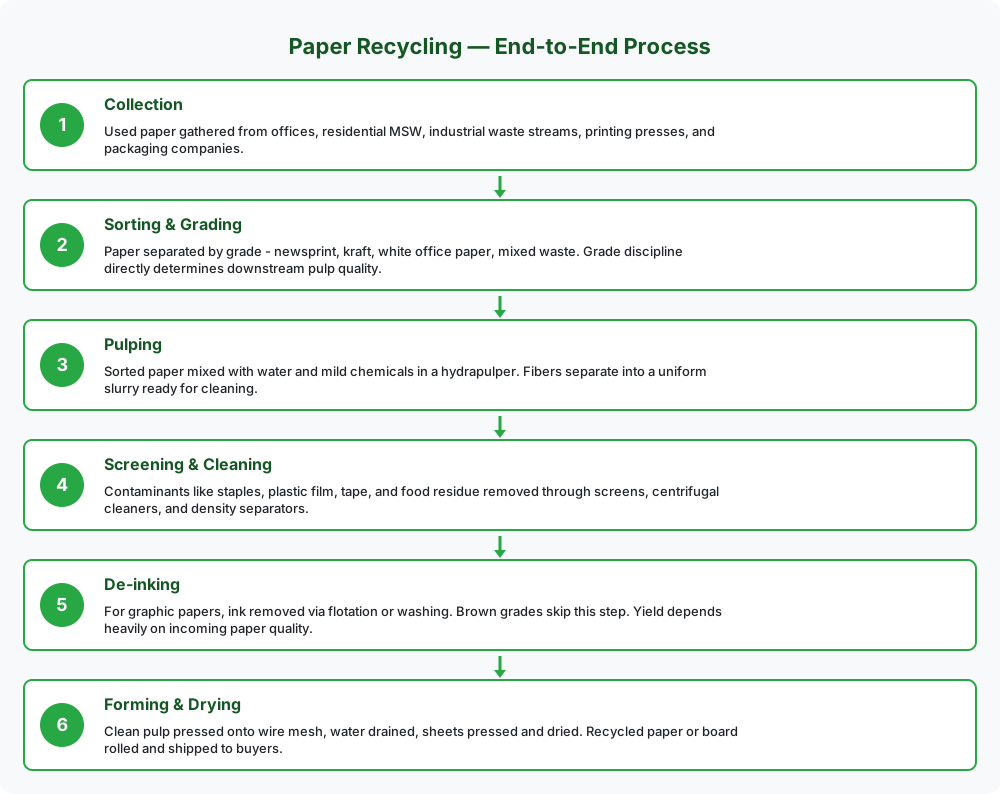
The paper recycling process moves waste paper through six tightly coupled unit operations — pulping, screening, cleaning, deinking, refining and sheet formation — to convert collected fibre back into machine-ready stock at 88-94% yield depending on grade and contamination level. The choice of unit-operation sequence (and which steps to include or skip) is what separates a basic kraft recycler from a deinked-pulp writing-paper line.
A paper recycling business that produces unbleached packaging grades (testliner, kraft) can usually skip deinking and run a simpler 4-unit train: pulper, coarse screen, cleaner, paper machine. The paper recycling process for newsprint or writing grades must run all six operations including the deinking process, which adds ₹1.5-2.5 crore in flotation cell capex plus higher chemical opex on recycled pulp feed. Producing acceptable paper pulp brightness from mixed-source recovered fibre is the binding constraint on grade-mix decisions, and the economics of which grade to target drive the equipment list more than the other way around.
Investors evaluating capacity build-out economics across these technology stacks can find deeper technical and commercial analysis of the paper recycling technology stack and capacity-build economics framed for investor memos and board-deck use on Adhara Viveka. That sort of structured technical-and-economic view is useful when comparing OEM proposals or modelling sensitivity to mill offtake pricing.
10 Steps of Recycling Paper: From Collection to Sheet
The 10 steps of recycling paper, walked end-to-end as they actually run on a 25 TPD recovered-fibre line in India:
- Collection and weighbridge intake: incoming truck weighed; manifest matched against the supplier docket. Loads rejected at intake if visible contamination is over 5% or if moisture (estimated by spot-test) is over 14%. Roughly 8-12% of loads get rejected or down-graded at this stage in a well-run yard.
- Manual sorting and grading: 8-15 sorters working off a slow conveyor pull out non-paper contaminants (plastic films, foil, food residue) and segregate into ONP / OCC / mixed lanes. This is the labour-intensive backbone of the operation; sorter discipline directly controls downstream yield.
- Baling and intermediate storage: graded paper baled to 30-50 kg bales using a vertical or horizontal hydraulic baler. Bales stored under cover (humidity matters), tagged by grade and intake date for FIFO management.
- Pulping: bales fed into a hydrapulper or drum pulper with hot water. The paper recycling process here separates fibres from each other while preserving fibre length. Pulping consistency typically 4-6%. Dwell time 15-25 minutes depending on grade.
- Coarse screening and high-density cleaning: the pulp slurry passes through pressure screens (1.2-2.0 mm slot) to remove staples, paper-clips, plastic flakes. Cyclonic cleaners follow, removing sand, grit, glass — high-density contaminants.
- Fine screening and forward cleaning: tighter screens (0.3-0.8 mm slot) and forward (lightweight-contaminant) cleaners pull out wax, stickies, ink particles too large to flot. This is where stickie management — adhesives from labels, tapes, sticky-notes — sinks or saves the line.
- Deinking process (skip for kraft / packaging lines): flotation cells with surfactants float ink particles to a foam layer that is skimmed off. The recycled pulp coming out is markedly brighter (ISO 55-65 versus 35-45 pre-deinking). Required for newsprint and writing-paper output; optional and skipped for unbleached kraft.
- Refining and dispersion: the screened pulp passes through disc refiners to develop fibre bonding and through a disperser to break down any remaining ink particles below visibility threshold. This is the recipe-tuning stage where the operator dials in burst strength versus tear strength.
- Sheet formation on the paper machine: the prepared paper pulp lands on the Fourdrinier or Cylinder Mould wire, dewaters through gravity and vacuum, then passes through press rolls and dryer cans. Output is a continuous web reeled at the dry end at 80-180 metres per minute depending on machine size and grade.
- Reeling, slitting, packing and dispatch: the mother reel is slit to customer-spec widths, wrapped, weighed and labelled. Standard despatch is in roll-form (40-60 inch widths, 800-1,200 kg each) for converters, or in cut sheets for retail-grade output.
The operating envelope across these ten steps of the paper recycling process determines the difference between a 75%-yield line and a 92%-yield line. The same equipment, run by an experienced shift supervisor against a poorly trained one, can swing yield 5-7 percentage points — which on a 25 TPD line is ₹30-45 lakh a year of EBITDA.
Profitability and Revenue Streams in a Paper Recycling Business
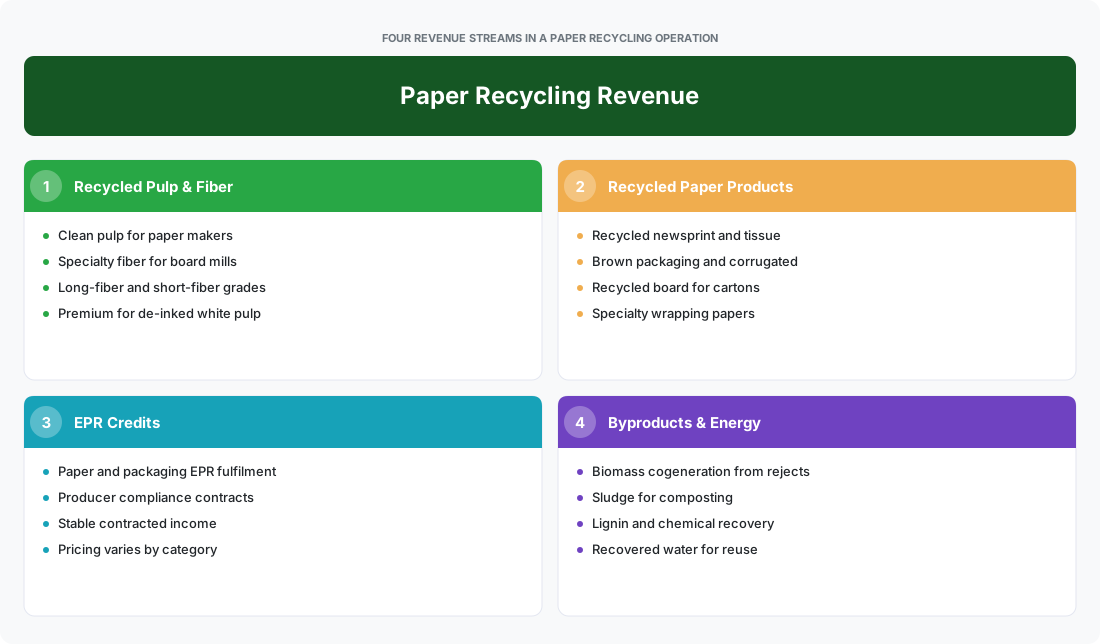
A well-run 25 TPD paper recycling business in India generates ₹14-19 crore in annual revenue and ₹2.8-4.5 crore in EBITDA at 18-25% margins — but profitability is tightly conditional on three controllable variables: yield (88%+), utilisation (75%+), and contracted offtake share (60%+ of output). Operators who hit all three perform consistently across cycles; operators who miss any one of them struggle whenever waste-paper or pulp prices move against them.
Break revenue into the three structural streams a recovered-paper plant runs:
- Primary fibre sales (recovered pulp to mills or own-machine output to converters): 70-80% of revenue. Pricing ₹28-42 per kg for kraft/testliner output, ₹35-55 per kg for unbleached and lower-grade writing paper, ₹50-75 per kg for high-bright deinked newsprint and writing paper output. Tightly contracted with 2-3 anchor mills or converters.
- Process by-products and rejects: 8-15% of revenue. Plastic fraction skimmed during sorting sells to PE/PP recyclers at ₹18-28 per kg. Metal fraction (staples, clips, foil) sells to scrap dealers at ₹25-45 per kg. ETP-recovered sludge is sometimes accepted by cement kilns for co-processing at a small charge or break-even — important for ETP compliance more than revenue.
- EPR credits and brand-owner contracts: 5-10% of revenue for paper recycling business operators who register on the CPCB EPR portal and supply tracked recovered fibre to FMCG and e-commerce brand owners. This stream is small but growing rapidly — large brand owners now pay ₹2.5-5 per kg premiums on EPR-tracked supply.
On the cost side, the durable structure for a 25 TPD plant is roughly:
- Raw material (waste paper procurement): 50-60% of total opex. The single biggest cost line and the one the operator has most direct control over through procurement discipline.
- Energy (power + steam): 15-22% of opex. A captive biomass boiler reduces this by 25-35% versus pure grid + coal — the payback on a ₹60-90 lakh biomass-boiler upgrade is typically 18-30 months.
- Labour: 8-14% of opex. A 25 TPD plant employs 45-65 people across two shifts. Sorters are the largest category. Local labour at ₹12,000-18,000 per month plus statutory.
- Chemicals (for deinking lines): 4-8% for deinking-bearing lines, near zero for unbleached kraft lines.
- Maintenance, insurance, admin, finance costs: 8-15%.
The economics of a recovered-fibre plant are sensitive in obvious ways — a ₹1 per kg movement in mill offtake pricing changes EBITDA by ₹60-90 lakh per year on a 25 TPD line — but the often-missed lever is moisture and contamination management. Every 1% of inbound contamination that makes it past the sorters becomes 1.2-1.5% yield loss downstream, plus eventual sludge-disposal cost. Operators who measure contamination at three points (intake, post-screen, post-cleaner) and feed the data back into supplier scorecards routinely outperform peers by 200-300 bps on EBITDA margins.
A profitable paper recycling business is a sustainable business by design — the same operational disciplines (yield, utilisation, contamination control) that drive financial returns are what regulatory agencies look for during SPCB audits and what brand-owner EPR auditors verify during recovered-fibre traceability checks. The two value systems align cleanly here, which is structurally unusual in the broader waste sector.
Location and Infrastructure for Your Paper Recycling Unit
Siting a paper recycling unit is more determinative of long-run profitability than equipment selection — and most first-time operators get the site decision wrong because they optimise for land cost instead of catchment economics. The right site sits inside the operational triangle of a strong waste-paper catchment (within 100-150 km), reliable water and power supply, and viable mill or converter offtake within 250-300 km. Miss any leg of the triangle and the plant runs at structural disadvantage.
The siting checklist a paper recycling business operator should run before signing land:
- Catchment: map waste-paper generation density at 50, 100 and 150 km radii. A metro within 50 km drives 60-75% of feed. Tier-2 industrial belts within 100 km add another 15-25%. Beyond 150 km, transport cost erodes 30-40% of procurement margin.
- Water availability: a 25 TPD plant consumes 800-1,500 m³ of water per day. In water-stressed zones, this becomes a binding constraint — CPCB will not issue Consent to Establish without a documented sustainable water source plus ZLD compliance, which adds ₹50-90 lakh to ETP capex.
- Power infrastructure: 800-1,500 kVA connected load for a 25 TPD unit. Industrial-estate locations get reliable supply at ₹7.5-9.5 per kWh. Standalone sites outside estates often face 4-8 hours of daily outages and need oversized DG backup, which adds ₹25-40 lakh to capex and ₹30-50 lakh annual opex.
- Logistics access: dedicated 4-lane state highway or NH within 5 km, port access within 250-350 km if planning future import-feedstock, rail siding access within 25 km. Logistics cost typically 4-7% of revenue; bad logistics access can push it to 9-12% and crush margin.
- Regulatory zoning: the plot must be in industrial-zone (I-1, I-2 or equivalent state classification). Buying a plot in mixed-use or agricultural zoning and trying to convert it post-purchase adds 6-12 months and ₹5-15 lakh in conversion fees, plus exposure to SPCB siting objections.
The single highest-leverage decision a paper recycling unit operator makes on site selection is the choice between a Tier-1 metro outskirt versus a Tier-2 industrial belt. Tier-1 outskirts (e.g., Bhiwadi for Delhi-NCR, Khopoli for Mumbai, Hosur for Bangalore, Chengalpattu for Chennai) offer richer catchments but land cost is 2-3x higher and water permits harder. Tier-2 belts (Vapi, Aurangabad, Kanpur, Hosur, Rourkela) offer cheaper land and easier permits but the catchment leans heavier on aggregator networks. For a first-time operator below ₹10 crore total capex, Tier-2 with a strong agro-fibre belt nearby is usually the better risk-adjusted choice. Above ₹15 crore capex, metro outskirts become economically defensible because the catchment density compensates for higher fixed costs.
One environmental impact note that operators routinely under-plan for: the visible operational footprint of a paper recycling business — daily truck movements, baling-yard noise, ETP discharge profile, occasional odour from stored paper in monsoon — generates community-level friction in any site within 1-1.5 km of residential clusters. Pick land that puts you at least 2 km buffer from the nearest residential zone, even if it costs 20-30% more per acre. The capex saving on closer land is not worth the 5-10 years of community-protest risk a paper recycling unit lives with otherwise.
Running a Recycled Paper Business: Sales and Buyers
A recycled paper business succeeds or fails on offtake — not on production cost, not on machinery selection, not on procurement. Operators with 60%+ of monthly output locked into 12-month anchor mill or converter contracts ride through commodity cycles. A paper recycling business selling spot-only into the open market takes whatever the mill rate is on shipment day, which during downturns can wipe out 6-9 months of EBITDA in a single quarter.
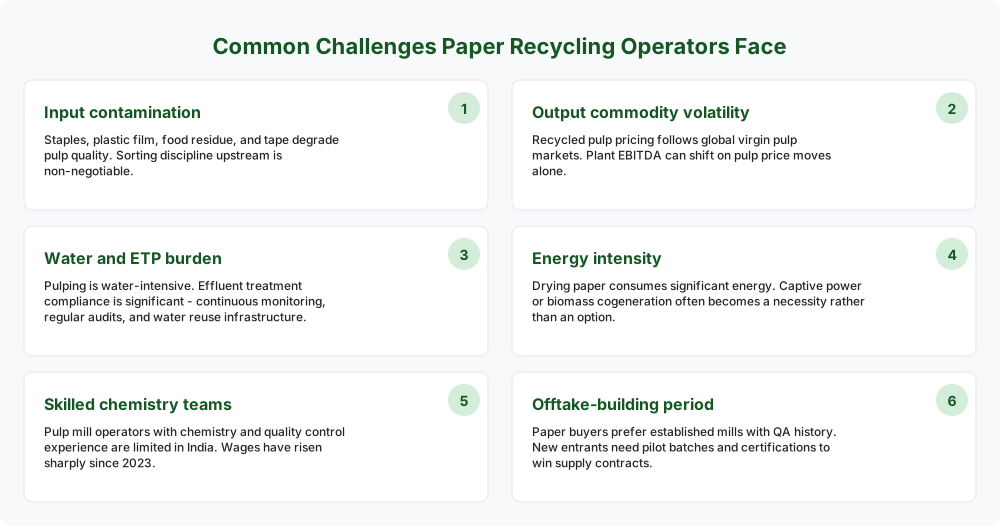
The buyer landscape for a recycled paper business in India sits across four customer archetypes, each with its own pricing logic and contracting cadence:
- Large integrated paper mills (ITC PSPD, JK Paper, Century Paperboards, West Coast Paper, BILT): volume buyers of recovered pulp and bulk recovered fibre. Take 50-200 tonnes per month per mill from a steady supplier. Pricing on a published-rate model with monthly resets, 30-45 day payment terms. The most reliable cashflow profile but the lowest margin (mills extract scale leverage).
- Corrugating and packaging converters: consume the operator’s own-machine output as testliner, kraft and corrugating medium reels. Volume 20-80 tonnes per month per converter. Pricing typically ₹1.5-3 per kg above mill-direct rates because the operator captures the converting-step margin. 45-60 day payment terms; bigger contracts are 12-24 months.
- FMCG and e-commerce brand-owner direct contracts: rare but growing for EPR-tracked recovered fibre. Pay ₹2.5-5 per kg premiums above market rates. Demand auditable traceability (batch-level documentation, supplier-of-supplier visibility). Bureaucratically heavy but margin-rich.
- Tissue, hygiene and specialty paper buyers: niche but lucrative for operators producing high-bright deinked pulp. Premiums of ₹4-8 per kg over standard recovered-pulp pricing. Quality bar very high — ISO brightness must be over 65, with stable ash and fibre length specs.
The contracting discipline that separates a profitable paper recycling business from a struggling one is fairly mechanical: 50-65% of monthly tonnage in 12-month anchor contracts (paper mills + 1-2 packaging converters), 15-25% in 3-6 month rolling contracts (smaller converters), 15-25% in spot-market sales (price discovery + opportunistic upside during cycle peaks). Operators who skew above 35% spot-market exposure run cashflow risk during commodity downturns; operators who lock in 90%+ in long-term anchors lose the ability to capture cyclical upside. The 60-25-15 distribution is the empirical optimum across the operators we tracked.
Building the buyer book in months 1-9 is harder than building the supplier book. Mills demand a 6-12 month delivery track record before committing to anchor contracts — which means the first nine months of operation typically run on a mix of converter contracts (easier to win) and spot sales. Operators who skip this phase by trying to push to mill-anchor pricing immediately get refused; operators who plan for it explicitly hit positive EBITDA in months 10-15. Building the buyer side faster is where independent advisory matters: verified paper-recycling consultants, paper mill buyers and packaging converters listed on MyWasteSolution are a practical shortlist for an operator looking to compress the buyer-acquisition timeline through warm introductions and contract-validation support.
One operational discipline that compounds buyer relationships: weekly delivery consistency. A buyer who has been let down twice in three months on volume or quality will drop the supplier the moment a backup option emerges. A buyer who has received 18-24 months of consistent weekly deliveries treats the supplier as a captive partner and accepts price discussions on the operator’s terms. This is the single highest-leverage operational behaviour in a recycled paper business — and the one most often abandoned during stressful quarters. The 25 large companies that recycle paper at meaningful scale in India all have this discipline; the marginal operators don’t.
Competition and Companies in Paper Recycling in India
The competitive landscape in the paper recycling business in India is bifurcated: a dozen large integrated paper mills handle 60-65% of recovered fibre at the mill end, while 800-1,200 mid-scale recyclers and aggregators cover the procurement-and-conversion middle. A new entrant doesn’t compete with ITC or JK directly — that’s a multi-thousand-crore game. The new operator competes with the 30-50 mid-scale operators in their region for waste-paper supply and converter-tier offtake. Understanding which tier you’re entering matters more than knowing the marquee names.
This pattern of “Tier-1 integrated players plus Tier-2 fragmented operators” repeats across most waste-stream sectors in India — a comparable analysis of competition in the e-waste recycling business in India shows the same shape, with Attero, MMTC-PAMP and Hindalco anchoring the formal Tier-1 and a long tail of mid-scale dismantlers handling regional volume. The strategic implication for a new paper recycling business is the same in both sectors: build defensible mid-scale positions, do not chase the integrated giants. The sub-section below profiles the major companies that recycle paper in India to inform that positioning.
Major Paper Recycling Companies in India
The five integrated paper mills below collectively account for the bulk of branded recovered-fibre demand in India. These are not new entrant competitors — they are potential offtake customers. Operators planning a recycled paper business should map the closest 2-3 paper mills to their proposed site and qualify which grades they buy, what payment terms they offer and what minimum monthly volumes they require.
| Company | Mill Location | Capacity (TPA) | Recovered-Fibre Share |
|---|---|---|---|
| ITC PSPD (Paperboards and Specialty Papers Division) | Bhadrachalam (Telangana), Tribeni (West Bengal), Kovai (Tamil Nadu) | 800,000+ | 40-55% in packaging grades |
| JK Paper | Rayagada (Odisha), Songadh (Gujarat), Sirpur (Telangana) | 700,000+ | 30-40% in writing/printing |
| Century Paperboards | Lalkuan (Uttarakhand) | 520,000+ | 60-75% in packaging board |
| West Coast Paper Mills | Dandeli (Karnataka) | 320,000+ | 20-30% (primarily bagasse-fed) |
| BILT (Ballarpur Industries) | Ballarpur (Maharashtra), Bhigwan (Maharashtra) | 500,000+ | 35-45% in mixed grades |
Beyond these integrated players, the next tier is roughly 50-80 medium-scale paper companies that recycle paper at 50,000-200,000 TPA — Emami Paper, Naini Tissues, Khanna Paper, Sangal Paper, Shreyans Industries and similar regional operators. These are the realistic offtake targets for a 25 TPD recovered-fibre supplier because the volume match is right (50-200 tonnes per month is meaningful to them but not transactional). Below this scale sits the long tail of small mills, kraft-only converters and corrugators that absorb the bulk of fragmented operator output.
Competitive positioning for a new operator: don’t try to win against the integrated Tier-1 mills on cost — their scale advantage on procurement and energy is structurally unwinnable. Compete on responsiveness, contamination control, and grade-mix flexibility. A 25 TPD operator who can switch grade mix within 7-10 days in response to a converter’s order book is more valuable to a mid-scale buyer than a giant mill that takes 30-45 days to reconfigure a run. That responsiveness is the durable competitive edge most companies that recycle paper at the new-entrant tier compete on.
Government Support and Schemes for Paper Recycling Businesses
Central and state government support for a paper recycling business in India runs across three programme types: capital subsidies (mostly state-level), interest subvention on green-financed projects, and EPR-portal incentives at the central level. Together they can offset 8-18% of total capex on a well-positioned project — meaningful but rarely decisive. Operators should plan capex assuming zero subsidy, then treat any captured incentive as upside, not as a load-bearing line in the financial model.
The five most consequential schemes a paper recycling business can realistically tap:
- Pradhan Mantri Mudra Yojana (PMMY) and SIDBI Tarun loans: the most accessible entry-level finance route for sub-₹1 crore pilot operations. PMMY Tarun goes up to ₹10 lakh; SIDBI specifically funds green-tech ventures up to ₹1 crore at interest rates 1.5-3 pp below scheduled-commercial-bank standard rates.
- MNRE-linked biomass-boiler and energy-efficiency subsidies: 25-50% subsidy on captive biomass-boiler installation depending on state policy. Particularly useful for operators in sugarcane-belt states (UP, Maharashtra, Karnataka) where bagasse co-firing pairs naturally with the boiler economics.
- State capital-subsidy schemes: Maharashtra (PSI), Gujarat (industrial policy capital subsidy), Tamil Nadu (CSIDC), Telangana (TS-iPASS) all offer 15-35% capital subsidy on plant-and-machinery for first-time entrepreneurs in MSME tier. Maximum quantum ₹30-75 lakh depending on state. Application timelines 6-14 months, which means file in parallel with CTE not after CTO.
- EPR portal monetisation: CPCB’s EPR registration for paper packaging is not yet mandatory the way plastic packaging EPR is, but participation lets the operator sell verified recovered-fibre credits to brand owners. Effective revenue uplift ₹1.5-4 per kg on registered output.
- GST refund on capital goods: the standard 18% input GST on capital equipment is recoverable against output-tax liability over 36-48 months. Not strictly a subsidy but functionally returns ₹50-90 lakh of cash to a ₹5-8 crore plant over the recovery period.
The single most under-utilised resource for serious operators is the published policy framework itself. The MoEFCC notifications on EPR and recycling-sector incentives codify which states have what programmes active in any given fiscal — operators relying on second-hand consultant summaries miss policy windows that open and close on six-monthly cycles. Read the source notifications directly; check for the implementing-rule version and effective date.
One judgment call worth flagging: the size of state subsidy versus the bureaucratic load to capture it. For an operator with under ₹3 crore total capex, the time cost of chasing a 25% ₹75-lakh subsidy is often higher than the subsidy itself. Above ₹8 crore capex, the subsidy quantum justifies the effort. Below that threshold, focus on the predictable PMMY/SIDBI route and treat state-subsidy as an opportunistic upside.
Frequently Asked Questions
The six questions below are the ones we hear most often from operators evaluating a paper recycling business in India. Each answer is grounded in the financial and operational ranges set out earlier in this guide — refer back to the relevant H2 for the deeper context behind any number quoted here.
Is paper recycling business profitable in India?
Yes, conditionally — a well-run 25 TPD paper recycling business in India operates at 18-25% EBITDA margins and 3.5-5 year capex payback, but only for operators who hit three operational thresholds simultaneously: 88%+ yield, 75%+ utilisation, and 60%+ contracted offtake share. Plants that miss any one of these drift into single-digit margins and 7+ year payback. Profitability is structural, not automatic — the full margin and cost-structure breakdown sits in the profitability section above.
What is the cost of setting up a paper recycling plant?
Total realistic paper recycling plant cost ranges from ₹1.5-2.3 crore for a 5 TPD pilot, ₹5.5-8.5 crore for a 25 TPD mid-scale operation, and ₹17-24.5 crore for a 100 TPD integrated mill — all inclusive of land, machinery, civil works, utilities and working capital. The 25 TPD tier offers the best risk-adjusted entry point for first-time operators. Full capex breakdown by line item is in the investment and setup-cost section above.
What licences are required for a paper recycling business?
A paper recycling business needs four core licences: SPCB Consent to Establish and Consent to Operate (under the Water and Air Acts), Factories Act registration once 10+ powered workers are employed, GST and municipal trade registration, plus optional but commercially valuable EPR portal registration on the CPCB platform. Total elapsed time clean-slate to operating consent is 5-8 months for a 25 TPD unit. Detailed scope, fees and ETP/ZLD design implications are in the licences and legal-requirements section above.
What is the price of 1 kg of paper in India?
The price of 1 kg of paper in India varies sharply by grade: old newspaper (ONP) sells at ₹12-15 per kg, old corrugated cartons (OCC) at ₹14-18 per kg, white office paper at ₹15-22 per kg, magazines at ₹8-10 per kg, and mixed unsorted waste paper at ₹5-8 per kg at the kabadiwala door. Mill-gate pricing for graded recovered fibre runs ₹3-6 per kg above these door rates depending on cleaning and grading work performed.
What are the 7 Rs of recycling?
The 7 Rs of recycling are Refuse, Reduce, Reuse, Repurpose, Repair, Recycle and Rot. For a paper recycling business operator, the meaningful framework is the second half of the list — Recycle (mechanical recovery into fibre) and Rot (composting of unrecoverable fractions like food-stained paper). Refuse, Reduce and Reuse upstream actually shrink the addressable waste pool, but the structural trend in India is volume growth driven by packaging and e-commerce, so net addressable feed is still expanding through 2030.
How much is a kilo of used paper?
A kilo of used paper in India fetches ₹5-22 depending on grade and contamination level — mixed unsorted residential waste paper at ₹5-8 per kg from the kabadiwala route, while sorted office paper (SOP) or white ledger from corporate contracts commands ₹15-22 per kg. Aggregators sourcing in bulk from RWAs, schools and offices pay 15-25% less than retail kabadiwala door rates because they take volume risk. The grade-by-grade breakdown sits in the waste-paper suppliers section above.
Starting Your Paper Recycling Business: The Path Forward
A paper recycling business in India is not a generic scrap trade and not a low-discipline opportunity. It is a manufacturing-plus-logistics-plus-commodity-trading operation that returns 18-25% EBITDA at 25-50 TPD capacity when executed properly, and breaks down quickly when the operator under-invests in any one of yield, utilisation or contracted offtake. The structural tailwinds — packaging-driven volume growth, EPR adoption, mill expansion to 2028 — are real, but they reward operators with operational discipline far more than they reward early movers without it.
Three takeaways for an operator deciding whether to commit capital:
- Site selection is more determinative than equipment selection. A 25 TPD plant in the wrong catchment loses 200-300 bps of EBITDA versus the same plant in the right catchment. Map the catchment-water-power-offtake triangle before signing land. Tier-2 industrial belts with cheap land and weak permits look attractive on paper but punish operators with unstable utilisation.
- Build the buyer book before the supplier book. Operators who lock in 50-65% anchor offtake before commissioning ride through commodity cycles; operators who chase mill-anchor contracts post-commissioning lose 9-15 months of lower-margin spot operation. Pre-commitment letters from converters are worth their weight in capex.
- Plan for the contamination war from day one. Inbound contamination over 2% destroys yield and margin faster than any other operational issue. Build sorter discipline, manifest documentation and supplier scorecards before the first batch — not after the first SPCB audit notice. A paper recycling business is judged by mill auditors and SPCB inspectors on the same set of operational records.
For first-time operators, the highest-leverage step before committing capex is validating the plant plan with people who have already run paper-fibre operations through a full commodity cycle. Verified paper-recycling consultants and machinery vendors on MyWasteSolution to validate your plant plan before deployment compress the 18-month learning curve into a 4-8 week structured review of capex, procurement strategy, offtake contracting and ETP design. A paper recycling business is worth getting right the first time — the cost of correcting structural mistakes after commissioning is multiples of the cost of avoiding them in planning.