

What Is the Plastic Recycling Business in India (2026)
The plastic recycling business is the operation of converting post-consumer or post-industrial plastic waste into reusable raw material — typically washed flake or extruded granule — that manufacturers buy back to make new packaging, fibre, pipe and moulded goods. In India, the sector splits cleanly into two routes: the informal kabadiwalaKabadiwalaIndia's informal itinerant or shop-based scrap buyer who collects dry waste (plastic, paper, metal) from households and businesses — the grassroots link in India's recycling supply chain.Learn more about Kabadiwala -aggregator chain that handles the bulk of household PET and HDPE, and the formal CPCB-registered processor route that this guide focuses on, because the formal route is the only one that can sign EPR contracts, supply branded FMCG demand, and access MSME credit.
If you are evaluating how to start plastic recycling business operations in India, the first decision is which of those two routes you intend to build. Informal aggregation runs on negative working capital and razor-thin spreads but cannot serve regulated demand. Formal processing requires ₹20 lakh to ₹10 crore of capexCAPEXCapital Expenditure — one-time costs for equipment, infrastructure, and facility setup.Learn more about CAPEX depending on scale, but earns a meaningful premium because it sells into traceable, compliance-driven channels.
A formal plastic recycling business in 2026 typically does three things in sequence: sources segregated waste from MRFs, brand collection programmes or industrial scrap, mechanically processes it through shredding, washing and pelletising, and sells the resulting recycled plastic products as granules into the polymer-buying market or as finished goods like furniture, road-grade aggregate or fibre. EPR-registered processors layer a fourth revenue stream — selling EPR credits to brand owners who must meet annual recycling targets under the Plastic Waste Management RulesPlastic Waste Management RulesIndia's Plastic Waste Management Rules 2016 (amended 2021 and 2022) — the primary regulation governing plastic waste processing, EPR targets for producers, PWP registration for recyclers, and the ban on 19 single-use plastic items.Learn more about Plastic Waste Management Rules .
This is not the same as plastic waste management consultancy or the brokering of unsegregated mixed waste. Those are adjacent but lower-margin businesses. The unit economics of formal recycling — typically 15-25% gross margins at 2-4 year payback — depend on operating an actual processing facility with the right machine mix for the polymer streamsAllowed vs Restricted Plastics for PyrolysisLays out which polymers (PET, HDPE, PP, etc.) work as feedstock and which (PVC, multi-layer) cause problems, with the reasoning behind each.Preview diagram you plan to handle.
Three things matter most to a first-time operator: polymer focus (a single-stream PET line is a different business from a mixed flexibles line, and the two require different machines), input procurement (steady supply at predictable price beats opportunistic scrap-buying), and EPR alignment (registering as a Plastic Waste ProcessorPWPPlastic Waste Processor — a CPCB-registered category under India's Plastic Waste Management Rules that allows plastic recyclers to issue EPR certificates and participate in the EPR credit market.Learn more about PWP and onboarding brand owners early lifts both volume and per-kg realisation). Operators who treat this as generic scrap trade struggle. Operators who build the processing-plus-EPR stack systematically tend to scale.
Links you might be interested in
Serious about starting a plastic recycling business?
Get the structured Business Overview Session — capex tiers, vendor lists, EPR mechanics, and a ready DPR template.
India's Plastic Waste Market in 2026: Size, Demand & Where the Money Flows
India generates over 3 million tonnes of plastic waste[1] each year (CPCB Annual Report 2022-23) — roughly 25,000 tonnes a day across 35 cities and thousands of smaller catchments. Founders evaluating how to start plastic recycling business operations in India should anchor capacity decisions to the city-level generation density in this data, not to national headline figures. Of that, formal CPCBCPCBCentral Pollution Control Board — India's apex statutory body for environmental regulation, constituted under the Water Act, 1974.Learn more about CPCB -registered processors recover an estimated 25-30%; the balance is either captured by the informal kabadiwala chain or leaks to landfill, drains and burn pits. The gap between what India generates and what the formal sector currently captures is the structural reason the plastic recycling business is a 5-7 year build-out opportunity, not a short cycle.
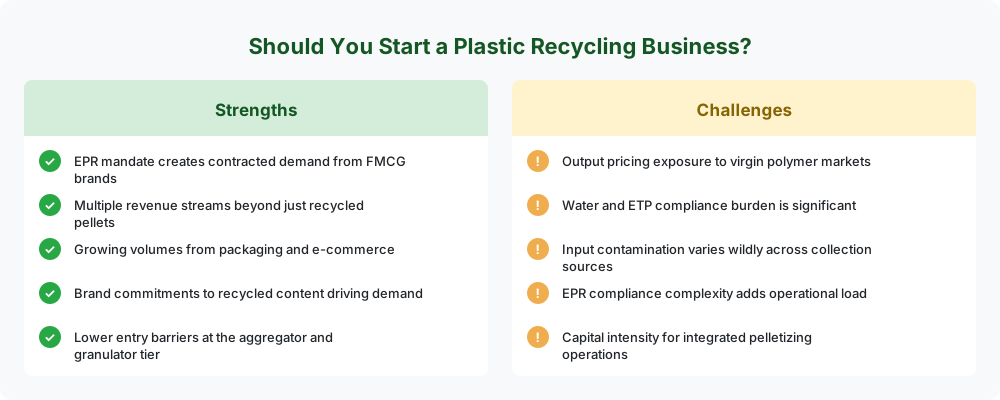
The Indian plastic recycling industry is valued at roughly USD 4 billion in 2024 and is projected to reach USD 6.9 billion by 2033[2] (industry estimates), a 5-6% CAGR. But the headline number understates what changed in 2022, when the Plastic Waste Management Amendment Rules made[3] Extended Producer ResponsibilityExtended Producer ResponsibilityExtended Producer Responsibility — a regulatory framework that holds producers responsible for the entire lifecycle of their products, including end-of-life collection and recycling.Learn more about Extended Producer Responsibility (EPR) mandatory for brand owners across all plastic packaging categories. EPR turned recycled material from a low-priced commodity into a compliance instrument with a price floor — and that single regulatory change is what moves the unit economics of a new plant from marginal to genuinely investable.
Three demand pools sit downstream of any formal recycling business in India today. First, the granule market: PET, HDPE, LDPE and PP recycled granule sells at ₹30-120/kg depending on polymer, colour and food-grade certification. Second, the recycled-product market: fibre for textiles, furniture, road-grade aggregate, plastic lumber. Third — and most importantly post-2022 — the EPR creditEPR CertificateA tradeable digital credit issued on the CPCB portal when a registered recycler processes e-waste; producers buy these to meet their annual recycling targets.Learn more about EPR Certificate market, where brand owners pay processors per tonne of certified recycled material to meet their annual obligation under the rules.
Operators who want to validate market assumptions before committing capital can find detailed industry intelligence on the Indian plastic waste sector — TAM modelling, formal-versus-informal share, EPR demand projections through 2030 on Adhara Viveka. The TAM/SAM math matters because the demand pool you can actually serve is constrained by your geography, polymer focus and EPR onboarding speed, not by the headline billions. Anyone planning how to start plastic recycling business operations against a regional buyer base should size capex to the catchment, not the national TAM.
On the supply side, the two raw material sources that matter for a formal plant in 2026 are Material Recovery Facilities (MRFs) and brand-led collection programmes. MRFs run by urban local bodies under the Swachh Bharat Mission produce sorted bales of PET, HDPEHDPEHigh-Density Polyethylene (resin code 2) — a rigid thermoplastic used in bottles, drums, and pipes, and one of the highest-value recyclable plastic streams in India.Learn more about HDPE and mixed flexibles at ₹15-40/kg; they are the most reliable bulk source but require trucking and longer payment cycles. Brand collection programmes — Coca-Cola's bottle take-back, Hindustan Unilever's flexible packaging recovery, the various PRO-led schemes — supply higher-quality, traceable material at a 10-20% premium because the bales come with chain-of-custody documentation that the buyer needs for EPR credit verification.
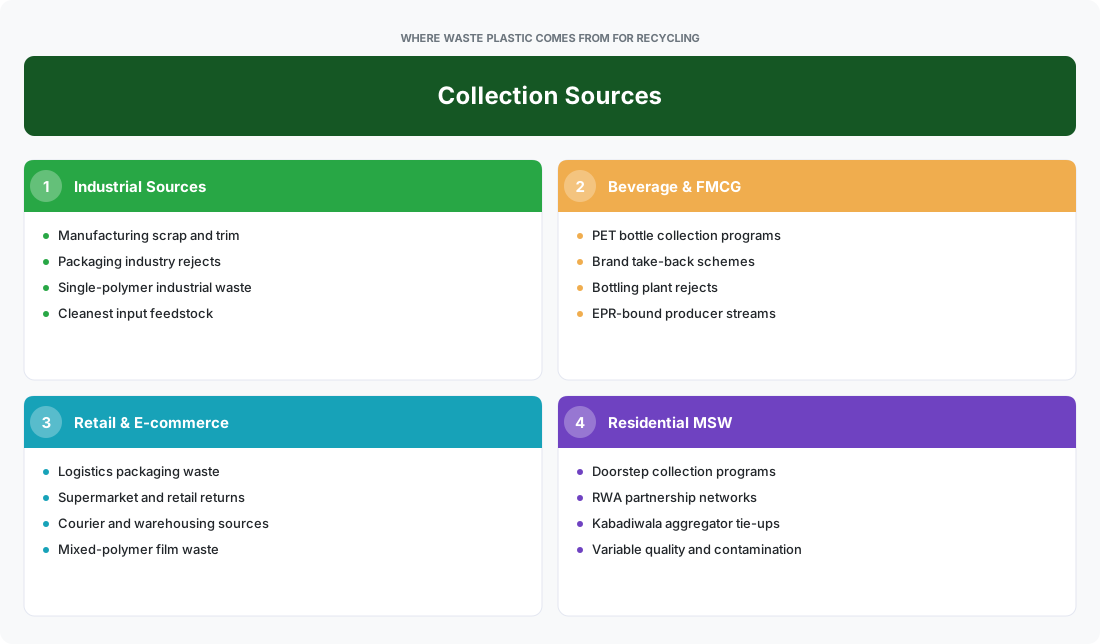
Industrial scrap is the third source: factory rejects, off-spec runs and packaging trim from FMCG, automotive and electronics manufacturers. This is the highest-margin material — it is clean, single-polymer and contracted directly with the generator — but volumes are smaller and competition from established processors is fierce.
The waste collection layer underneath all of this is still substantially informal: kabadiwalas, scrap dealers and waste pickers move an estimated 60-70% of post-consumer plastic[4] in Indian cities. A formal recycling business does not displace this network — it integrates with it, paying segregated rates and providing offtake reliability that the informal layer cannot get from the spot market.
The macro story is the circular economy push: brand owners signing recycled-content commitments (Coca-Cola targeting 25[5]% recycled PETrPETRecycled PET — polyethylene terephthalate pellets or flake produced from post-consumer PET bottles. Available as standard grade (for fibre) and food-grade (IV-restored via SSP, for beverage bottles and food packaging).Learn more about rPET , Unilever 25% by 2025[6]), state governments mandating recycled content in public procurement, and consumer-facing FMCG brands pricing the environmental impact of virgin plastic into their packaging decisions. None of those individually move the needle for a single recycler — but together they make the demand curve for certified recycled material structurally upward-sloping for the next decade.
Plant Cost in India: ₹20L to ₹10Cr Setup Tiers for Plastic Recycling
The plastic recycling plant cost in India ranges from ₹20-50 lakh for a small 1-2 TPDTPDTonnes Per Day — a unit of measurement indicating production or processing capacity on a daily basis.Learn more about TPD operation, ₹50 lakh to ₹2 crore for a medium 3-8 TPD plant, and ₹2-10 crore for a large 10+ TPD facility. The variance is driven by capacity, polymer mix, level of automation, whether you buy or lease land, and how much working capital you front-load. Operators who run a profitable formal recycling operation tend to size capex deliberately to the input volume they have actually contracted — not to the sales pitch from the equipment vendor. The first decision in how to start plastic recycling business build-outs is therefore capacity right-sizing against contracted feedstock, not aspirational nameplate.
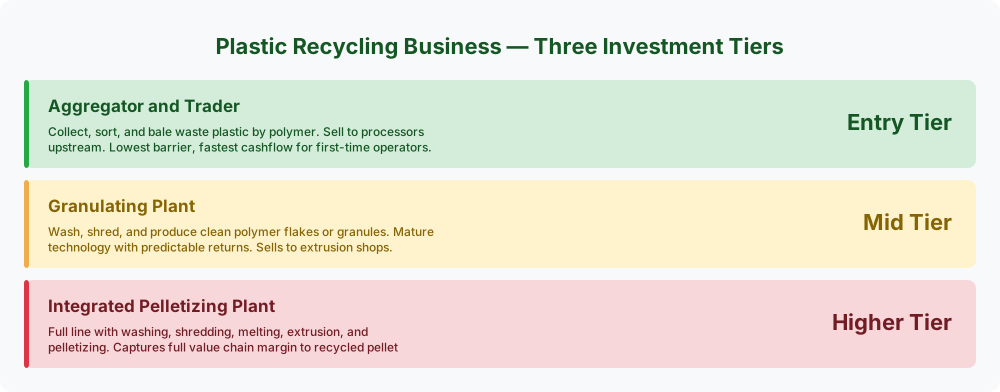
The plastic recycling plant setup cost has six major buckets: land and civil infrastructure, machinery, working capital for input procurement, licences and registrations, utilities and contingency. The way these split across plant size matters because the heavy capex items (machinery and civil) scale roughly linearly with capacity, while licences and contingency are largely fixed regardless of TPD.
| Plant Size | Capacity (TPD) | Land & Civil | Machinery | Working Capital | Total Investment |
|---|---|---|---|---|---|
| Small (entry-level) | 1-2 TPD | ₹5-15 lakh (lease 2,000-5,000 sq ft) | ₹10-25 lakh | ₹3-8 lakh | ₹20-50 lakh |
| Medium (commercial) | 3-8 TPD | ₹15-50 lakh | ₹25-100 lakh | ₹10-30 lakh | ₹50 lakh - 2 crore |
| Large (industrial) | 10+ TPD | ₹50 lakh - 2 crore | ₹1-6 crore | ₹40 lakh - 1.5 crore | ₹2-10 crore |
Land is the most location-sensitive line item. Industrial plots in MIDC (Maharashtra), GIDC (Gujarat) or KIADB (Karnataka) clusters run ₹3,000-8,000 per sq ft for purchase; leasing in the same zones runs ₹15-40 per sq ft per month. For founders evaluating how to start plastic recycling business operations in 2026 at small scale, leasing 2,000-5,000 sq ft on the urban periphery typically costs ₹20,000-1.5 lakh per month — and the lease route preserves capex for machinery, which is where output quality is decided.
Machinery is where most first-time operators over-spec. A 1-2 TPD line typically needs a single-shaft shredder, a plastic granulator, a washing line, a dryer and a basic pelletiser — roughly ₹10-25 lakh for Indian-built equipment, ₹25-50 lakh if you import critical pieces from China or Taiwan. Going to dual-shaft shredders, automated melt filters and friction washers becomes economically justified only at 3 TPD and above. The full machine breakdown is in the equipment H2 below.
Working capital is the line that quietly kills under-capitalised operators. You need 30-60 days of inventory float — bales sitting in your yard, work-in-progress on the line, finished granule waiting for buyer pickup — plus one month of utilities, salaries and rent. For a small plant that means ₹3-8 lakh; for a medium plant ₹10-30 lakh. Plan for 90 days of float in year one if you're newly building MRFMRFMaterial Recovery Facility — a sorting plant that separates mixed dry recyclables (plastic, paper, metal) into individual material streams before dispatch to recyclers.Learn more about MRF and brand-collection relationships, because payment cycles from municipal aggregators run 45-75 days.
Want the full cost breakdown with vendor names?
The Adhara Viveka BOS includes per-machinery vendor pricing, regional capex variations, and payback math by capacity tier.
Licences and registrations — CTE and CTO from the State Pollution Control BoardSPCBState Pollution Control Board — the state-level statutory authority that issues, monitors, and enforces environmental consents for industrial plants.Learn more about SPCB , EPR Plastic Waste Processor registration with CPCB, GST, factory licence, fire NOC and trade licence — total ₹2-5 lakh for a first-time small operator including consultant fees and fee schedule deposits. The detail of each is in the licences H2 further down.
Utilities (electricity connection, water connection, effluent treatment if you run a wet washing line) and contingency typically add another ₹3-10 lakh on top, scaling with plant size. The plastic recycling plant setup cost line nobody plans for is contingency: vendor delays, electrical work that exceeds estimates, the trial-run scrap that comes off the line in week one. Build in 10-15% buffer.
Two judgement calls move the total cost more than anything else. First, automation level: a manual sorting beltManual vs Automated Plastic Sorting LineCompares manual labour vs optical/NIR-based automated sorting in terms of throughput, capex, output purity, and labour cost.Preview diagram costs ₹2-3 lakh, an air-classifier system ₹15-20 lakh — but the air classifierAir ClassifierA separator that uses air flow to sort lighter materials (plastic, dust) from heavier metal fractions in shredded e-waste.Learn more about Air Classifier earns back at higher throughput with lower labour cost. Second, polymer focus: a single-polymer PET line at 2 TPD is materially cheaper than a mixed-polymer 2 TPD line because you skip the polymer-separation infrastructure entirely. Most successful first plants are single-polymer at small scale and add polymers only after the first line is profitable. Built that way, the plant operates as a sustainable business in both the financial sense (positive working capital cycle from month 6) and the operational sense (one polymer feedstock, one quality spec, one buyer profile to optimise against).
Machine Price Guide for Plastic Recycling Plants: Shredders, Granulators, Washing Lines & Pelletizers
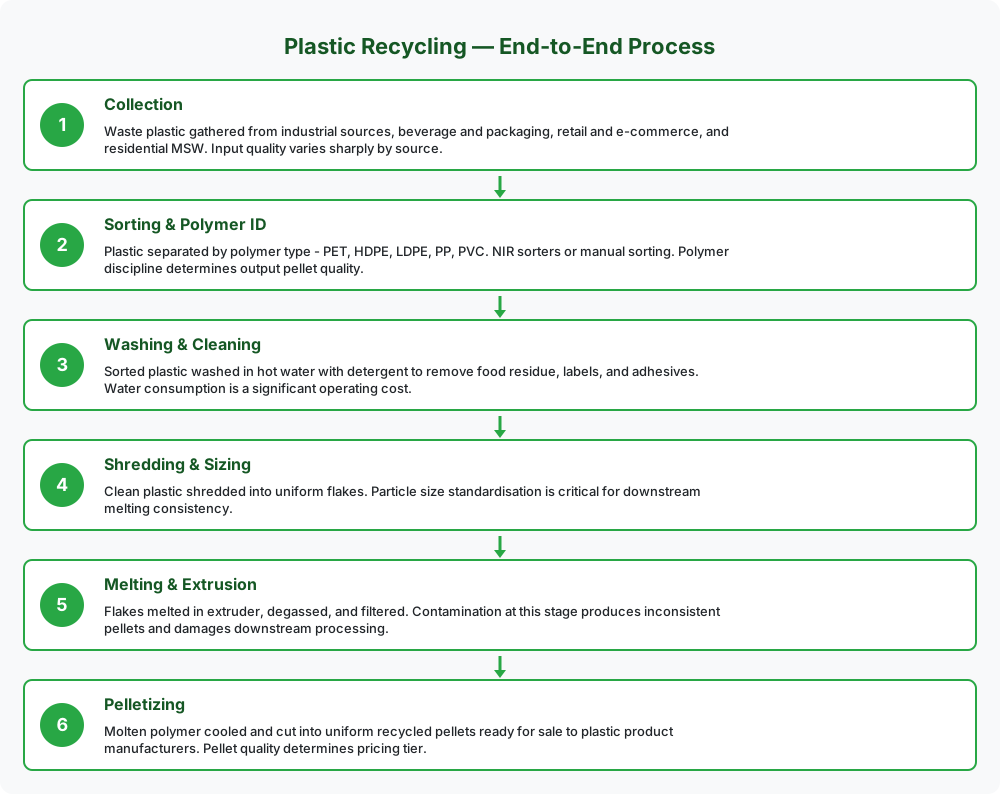
The waste plastic recycling machine price in India spans roughly ₹2 lakh for a small single-shaft shredder to ₹50 lakh for an automated multi-stage washing line — a 25x range that reflects how much the right machine choice depends on plant capacity, polymer mix and how much manual labour you want to design out. The machine selection decision is one of the costliest mistakes founders make when working out how to start plastic recycling business operations at small scale, because over-spec at 1-2 TPD locks ₹15-20 lakh of capex into capacity you won't use for two years. A 2 TPD line built with all-Indian equipment runs roughly ₹10-25 lakh; the same throughput with imported washing and pelletising sub-systems runs ₹25-50 lakh.
The full waste plastic recycling machine price in india breakdown across the four core stages is below. Lead times for Indian-built equipment run 4-8 weeks; imported sub-systems (mostly from China and Taiwan) run 8-16 weeks plus customs clearance.
| Equipment | Capacity Range | Price Band (₹) | Lead Time | Top Suppliers |
|---|---|---|---|---|
| Single-shaft shredder | 0.5-2 TPD | ₹2-8 lakh | 4-6 weeks | Vecoplan India, Forrec, local OEMs |
| Dual-shaft shredder | 2-10 TPD | ₹6-15 lakh | 6-10 weeks | Vecoplan India, Untha, imported |
| Plastic granulator (rigid) | 200-1000 kg/hr | ₹3-12 lakh | 4-8 weeks | Cumberland, Conair, Zerma |
| Plastic granulator (film) | 200-800 kg/hr | ₹5-20 lakh | 6-10 weeks | Specialised film granulator OEMs |
| Washing line (PET bottlePETPolyethylene Terephthalate (resin code 1) — the clear plastic used in beverage bottles and food trays, and India's most commercially valuable post-consumer plastic recyclate.Learn more about PET ) | 500-2000 kg/hr | ₹15-40 lakh | 8-14 weeks | Sorema, Amut, Indian OEMs |
| Washing line (HDPE/film) | 300-1500 kg/hr | ₹20-50 lakh | 10-14 weeks | Sorema, Herbold, imported |
| Friction washerFriction washerHigh-speed turbine washing machine that cleans shredded plastic flake by mechanical friction in hot caustic water — stripping labels, adhesive, and food contamination before extrusion. Core equipment in PET and HDPE recycling lines.Learn more about Friction washer | 500-1500 kg/hr | ₹4-10 lakh | 4-8 weeks | Indian OEMs |
| Centrifugal dryer | 500-1500 kg/hr | ₹3-8 lakh | 4-6 weeks | Indian OEMs |
| Single-screw pelletizer | 100-500 kg/hr | ₹8-15 lakh | 6-10 weeks | Steer, Coperion India, JSW |
| Twin-screw pelletizer | 200-1000 kg/hr | ₹15-25 lakh | 8-12 weeks | Coperion, Kraussmaffei, Steer |
| Melt filter (auto) | 200-800 kg/hr | ₹3-8 lakh | 6-8 weeks | Ettlinger, Maag, imported |
Shredders break large plastic items down to 30-100 mm pieces using rotating blades — single-shaft for ≤2 TPD operations, dual-shaft for 2 TPD and above. The plastic recycling machine price for a shredder reflects motor rating, screen size and steel grade more than brand name; insist on AR400 or harder steel for the rotor and budget ₹1-2 lakh for spare blades in year one.
Plastic granulators take shredded material and reduce it to uniform 5-15 mm flake suitable for washing and extrusion. Rigid granulators are simpler and cheaper than film granulators because film tends to wrap the rotor — film granulators include anti-wrap geometry and stronger drives. The flake output of a granulator becomes the input to the washing line, where dirt, labels and contaminants are removed before the material can be turned into clean plastic pellets.
Washing lines are where capex stops being an Indian-OEM-only choice. PET bottle wash lines from Sorema, Amut or Herbold (₹30-50 lakh imported) deliver food-grade-eligible flake; Indian OEMs at ₹15-30 lakh deliver granule-grade flake suitable for non-food packaging and fibre applications. The decision is a function of which downstream market you sell into.
Compare machinery vendors before you buy
Side-by-side machinery comparison, vendor shortlists, and capacity-to-output matching in the AV Business Overview.
Pelletisers melt washed flake and extrude it as cylindrical plastic granulesGranulationThe extrusion and cutting process that converts recycled plastic flake into uniform pellets (granules) — the final value-add step in mechanical recycling and the commercial product sold to plastic manufacturers.Learn more about Granulation typically 3-5 mm long, which is the form most polymer buyers want. Single-screw pelletisers are the standard for clean single-polymer streams; twin-screw pelletisers handle contaminated, mixed or filled material and add roughly 50-80% to capex but lift output quality substantially.
Melt filters sit between the extruder and the pelletising head; they remove molten contaminants (paper fibre, metal flecks, foreign polymer) and are non-negotiable if you sell to FMCG-grade buyers.
For first-time sourcing, browse the verified plastic recycling machinery suppliers and OEMs listed on the My Waste Solution marketplace — the catalogue covers shredders, granulators, wash lines and pelletisers from Indian and imported sources, with capacity, lead time and price-band data on each listing. Two procurement principles regardless of where you source from: insist on a vendor-led trial run with your actual polymer feed before signing the final invoice, and budget ₹3-6 lakh for installation, alignment and operator training because vendor-led commissioning is the difference between a line that hits nameplate in week two and one that struggles for six months.
Profitability: Margins, Payback & ROI in Indian Plastic Recycling
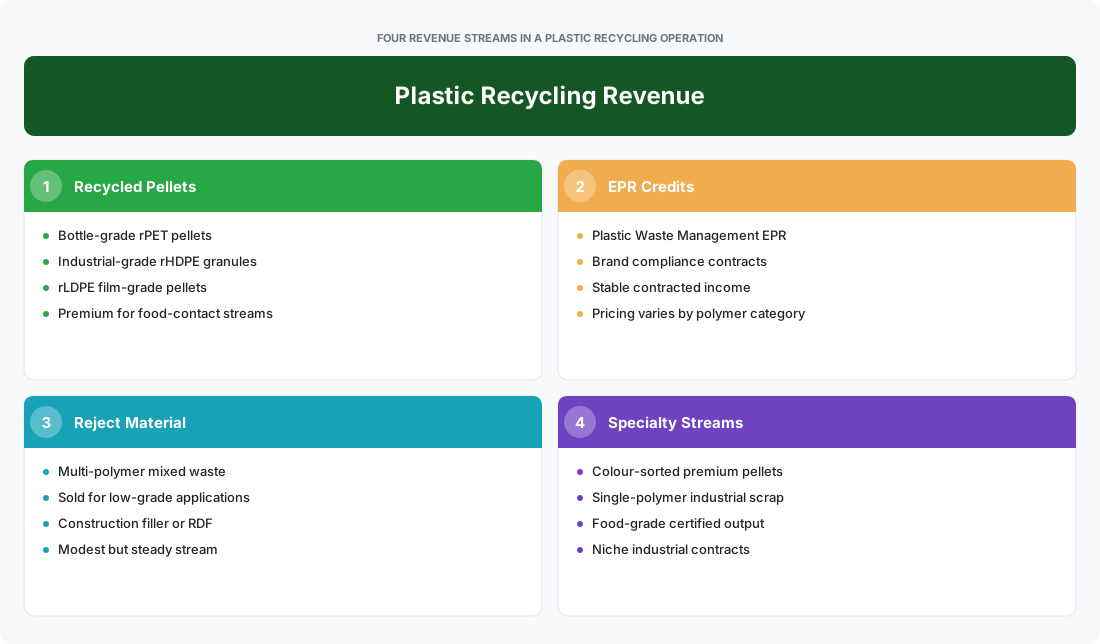
The plastic recycling business profit margin in india typically lands at 15-25% gross and 8-15% net for a well-run formal plant, with capex payback in 2.5-4 years. The variance is driven by three operational levers: input cost discipline (paying ₹15-25/kg for sorted PET versus ₹35-45/kg for opportunistic spot scrap), recovery yieldRecovery yieldThe percentage of input feedstock weight that emerges as saleable recycled output — the primary operational efficiency metric for a recycling plant. Typical range: 75–92% for Indian plastic mechanical recycling.Learn more about Recovery yield (95%+ on a clean PET line versus 70-80% on contaminated mixed feed), and the EPR contract share of revenue (which can lift the per-tonne realisation by ₹2,000-6,000 depending on polymer category and brand-owner deal terms).
The plastic recycling business profit margin in india on granule sales alone has compressed from the 25-30% the sector saw five years ago to 12-18% today as virgin polymer pricing softened and more processors entered the market. What restored healthier blended margins post-2022 was the EPR credit revenue layer — branded FMCG companies are obligated to procure recycled-plastic certificates from registered processors at a regulated minimum, and those certificates trade at ₹3-15/kg of certified processed material depending on category.
Per-plant unit economics scale less linearly than capex. A small 1.5 TPD plant runs at ₹8-15 lakh monthly revenue, ₹6-10 lakh monthly cost, ₹2-5 lakh net contribution — payback on a ₹40 lakh capex in 18-30 months if input procurement holds. A medium 5 TPD plant grosses ₹40-80 lakh monthly with ₹30-55 lakh of cost, netting ₹10-25 lakh — payback on ₹1.5 crore capex in 24-36 months. A large 10+ TPD plant runs ₹1-2 crore monthly revenue with ₹15-25% net margin, payback on ₹4-8 crore capex in 30-48 months.
| Plant Size | Capex | Monthly Revenue | Gross Margin % | Payback (months) |
|---|---|---|---|---|
| Small (1-2 TPD) | ₹20-50 lakh | ₹8-18 lakh | 20-28% | 18-30 |
| Medium (3-8 TPD) | ₹50 lakh - 2 crore | ₹30-90 lakh | 15-22% | 24-36 |
| Large (10+ TPD) | ₹2-10 crore | ₹1-3 crore | 15-25% | 30-48 |
Three line items determine whether a formal plant in India actually hits these margins or sits 5-8 percentage points below. Founders working out how to start plastic recycling business operations against the unit economics above need to plan around all three from day one, not as year-two optimisations.
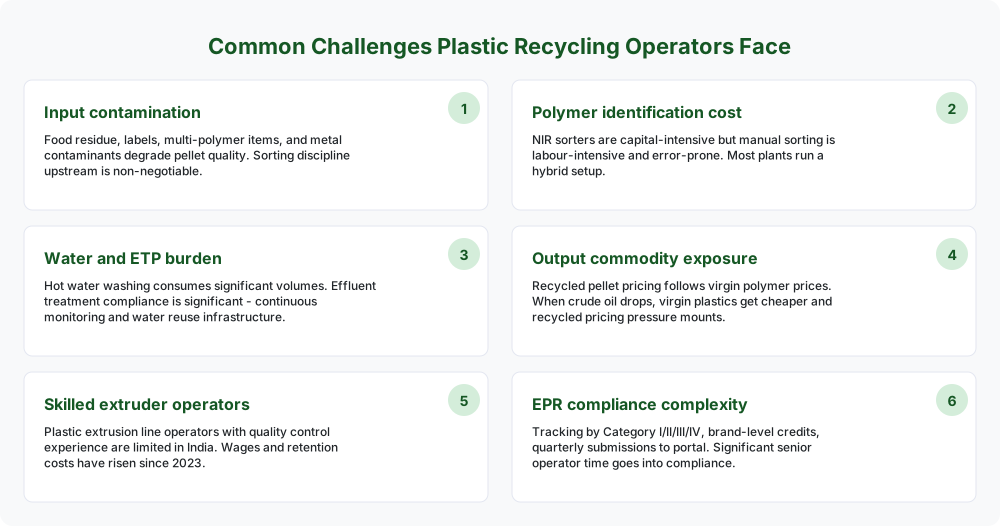
Input cost as a percent of revenue is the dominant driver. Operators who lock in MRF supply contracts at ₹15-30/kg with 60-day payment terms run input cost at 35-45% of revenue. Operators who buy spot from kabadiwalas at fluctuating ₹25-50/kg run input cost at 50-65% of revenue — and that 15-20 percentage point gap on the largest cost line is the difference between profitable and marginal.
See the profitability math at your capacity tier
Detailed margin breakdowns by polymer + capacity, multi-stream revenue model, and break-even analysis.
Recovery yield is the second lever. A clean single-polymer line on contracted MRF feed runs 92-96% recovery (output kg / input kg). A mixed-polymer line on spot scrap runs 70-82% — meaning you've paid for material you can't sell. Yield discipline starts at procurement (rejecting bales over a contamination threshold) and continues through process design (right machine for the polymer mix you're actually receiving).
EPR realisation is the newer lever and the one most first-time operators under-monetise. Without an EPR contract, you sell granule at the spot polymer price. With a CPCB Plastic Waste Processor registration and 2-3 brand-owner offtake agreements, you layer ₹2-6/kg of EPR credit revenue on top of the granule price — a 5-12% lift on gross realisation, which translates to 3-8 percentage points of net margin lift because the cost of generating the certificate is largely fixed.
Revenue mix matters as much as the headline margin. A typical formal recycler in 2026 splits revenue roughly 65-75% from recycled granule sales, 15-25% from EPR credits, and 5-15% from finished recycled products like fibre, lumber or compounded resin. Operators who treat all three as separate revenue streams (pricing them, contracting them, accounting for them separately) outperform operators who think of EPR as a side benefit.
Working capital efficiency is the variable that decides whether reported margins translate to cash. The benchmark for a well-run formal recycler is a 30-45 day cash conversion cycle: 20-30 days of inventory, 30-45 days of receivables (against MRF and brand offtake terms), 30-45 days of payables. Operators who let this stretch to 75-90 days end up borrowing at MSMEMSMEMicro, Small and Medium Enterprises — a classification of businesses based on investment and turnover, eligible for government schemes and certifications.Learn more about MSME rates to fund their own working capital, which eats 4-8 percentage points off the net margin without changing the gross.
Licenses, CPCB Approvals & EPR Registration for Plastic Recyclers
Operating a formal plastic recycling business in India in 2026 requires licences from three regulatory layers: state-level (CTEConsent to EstablishConsent to Establish — a regulatory approval issued by the State Pollution Control Board allowing an industrial plant to be set up at a specific location.Learn more about Consent to Establish and CTO from the State Pollution Control Board), central-level (CPCB EPR registration as a Plastic Waste Processor under the MoEFCC Plastic Waste Management Rules, 2016 and 2022 Amendment), and standard business registrations (GST, factory licence, fire NOC, trade licence). Each layer has its own application timeline, fee schedule and renewal cycle — and getting the sequencing right matters because some approvals depend on others. EPR compliance and pollution control board consents together account for the bulk of the regulatory work; the next two H3s walk through the EPR registration process and the state-level CTE/CTOConsent to OperateConsent to Operate — the formal approval an industrial plant must obtain from the State Pollution Control Board before commencing regular operations.Learn more about Consent to Operate consents in detail. How to start plastic recycling business operations on the right side of regulation begins with these two filings.
EPR Registration for Plastic Waste: Process, Fees & Target Obligations
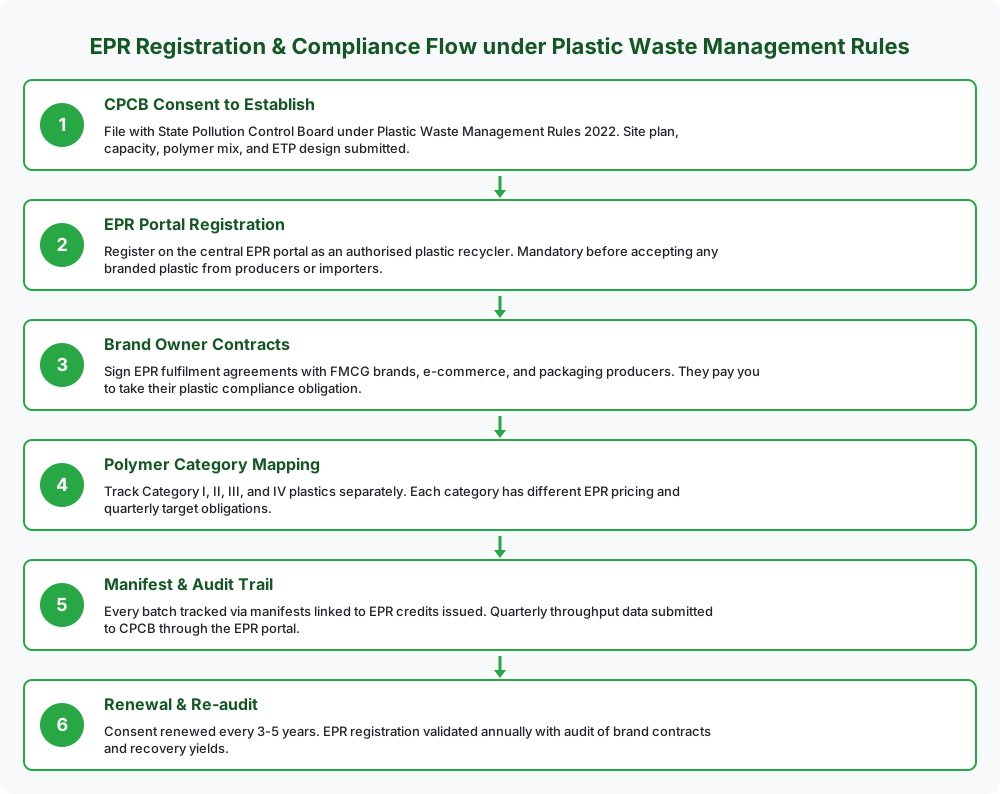
EPR registration for plastic waste is filed with the Central Pollution Control Board through the dedicated EPR portalEPR Traceability Chain for Plastic RecyclingVisualises how an EPR credit moves from waste collector → aggregator → registered recycler → CPCB portal → brand owner.Preview diagram at eprplastic.cpcb.gov.in. As a recycler, you register in the Plastic Waste Processor (PWP) category — there are three other registrant categories on the portal (Producer, Importer, Brand Owner), but PWP is the one that lets you generate and sell EPR certificates back to brand owners.
The application requires four document sets: a corporate identity bundle (PAN, GST, certificate of incorporation, board resolution), a plant identity bundle (CTE/CTO copies, factory licence, electricity bill, plant layout), a process bundle (capacity declaration in TPATPATonnes Per Annum — the annual capacity or throughput metric for recycling and processing facilities. Standard conversion: TPA = TPD × 300 operating days per year.Learn more about TPA , polymer category coverage, technology description) and a contract bundle (offtake agreements with brand owners or aggregators where available — these strengthen the application but are not mandatory at registration).
The CPCB EPR portal fee schedule for processors as of 2026 sits in the ₹5,000-25,000 range depending on installed capacity:
| Producer Category | EPR Fee Range | Document Set | Timeline |
|---|---|---|---|
| Small (≤1,000 TPA) | ₹5,000-10,000 | Corporate + Plant + Process bundles | 30-45 days from clean submission |
| Medium (1,000-10,000 TPA) | ₹10,000-20,000 | All four bundles + capacity verification visit | 45-75 days |
| Large (10,000+ TPA) | ₹20,000-25,000 | All four + on-site CPCB inspection | 60-90 days |
The process flow once you submit: portal-side document upload, payment, CPCB review (15-30 days for small, longer for larger), query response window (typically 7-15 days to address any clarifications CPCB raises), final approval and issuance of the PWP registration certificate with a unique EPR ID. From clean submission to certificate, plan for 30-90 days.
Annual target obligation is the part most processors under-prepare for. As a registered PWP, you're entitled to generate EPR certificates for the certified recycled material you process, but each certificate must be validated against an actual offtake transaction and uploaded to the portal monthly. Brand owners purchase these certificates to meet their annual obligation under the Plastic Waste Management Rules — Category I (rigid plastic), Category II (flexible plastic), Category III (multi-layered plasticMLPMulti-Layer Plastic — laminated flexible packaging (chip packets, shampoo sachets) combining multiple polymer layers. Non-recyclable by conventional methods; processed via co-processing, plastic roads, or pyrolysis under India's EPR framework.Learn more about MLP ) and Category IV (compostable plastic), each with its own target percentage and minimum recycled content requirement that escalates year over year.
Three operational rhythms matter once you have EPR registration for plastic waste in hand. First, monthly certificate generation requires the same documentation discipline as annual filing — input weighbridge slips, processed output records, sale invoices to verified buyers, and the brand-owner offtake confirmation that closes the chain of custody. Skipping any one of those breaks the audit trail and disqualifies the certificate.
Second, EPR portal trading (where brand owners buy certificates from processors) doesn't have a fixed price — it is a quarterly market clearing where the price is set by demand-supply for each polymer category. Category I PET certificates have traded at ₹3-8/kg through 2024-25; Category III multi-layered plastic certificates at ₹8-15/kg because supply is structurally constrained. Build your revenue forecast around mid-band realisation, not the high end.
Third, renewal is annual — your PWP registration must be renewed each financial year with updated capacity, technology and offtake disclosures. Operators who let renewal lapse lose certificate-generation rights and have to re-apply from scratch, which costs 60-90 days of revenue exposure.
Need help with EPR registration?
MWS has 241+ verified consultants who've handled CPCB consent, PWM 2022, and EPR portal registration for plastic recyclers.
The most common rejection reasons CPCB cites at first-pass review: capacity declared higher than CTO permits, missing or expired pollution-board consents, polymer categories declared without supporting machine specs, and missing waste-processor experience certificates for the technical team. Address these in the prep phase rather than at the query-response phase — first-pass clean submissions clear roughly 2x faster than ones that go through a query cycle.
For first-time applicants, EPR registration for plastic waste is increasingly handled through CPCB-empanelled consultants who package the documentation, run the portal interface and manage the query-response cycle for ₹50,000-1,50,000 depending on plant size and turnaround timeline.
CPCB Consent to Establish (CTE) & Consent to Operate (CTO)
State Pollution Control Board (SPCB) consent is the gating regulatory step before machinery can be installed. Plastic recycling falls under the Red category for most state boards because of the air emissions and effluent discharge profile of washing and pelletising operations. Two consents are required, in sequence: Consent to Establish (CTE) before construction or installation, and Consent to Operate (CTO) before commercial production begins.
CTE is the project-stage approval. The application requires plant layout, technology description, projected emissions and effluent characteristics, water and electricity consumption forecasts, and a manufacturing process flow diagram. Fees vary by state and capacity but typically run ₹5,000-50,000 for small-to-medium recyclers. Validity is 5-7 years depending on state, after which it lapses if construction has not started.
CTO is the post-installation approval that actually authorises commercial production. The board inspects the installed plant, verifies pollution control equipment (effluent treatment plantEffluent Treatment PlantEffluent Treatment Plant — facility that treats industrial wastewater to bring it within discharge standards before release to environment.Learn more about Effluent Treatment Plant for wet wash lines, baghouse or scrubber for any thermal step), and certifies the plant against the consents granted. Fees run ₹10,000-2,00,000 depending on capacity. Validity is typically 5 years for green/orange-category units and 3-5 years for red-category units; renewal applications must be filed 60-120 days before expiry.
Common rejection or delay reasons: undersized effluent treatment plant for the wash-line throughput declared, missing rainwater harvesting plan (mandatory in several states), insufficient distance from residential zones, incomplete consent fees deposit. Plan 60-90 days from clean CTE filing to issuance for small plants in well-functioning state boards (Maharashtra, Gujarat, Karnataka); allow 90-150 days in states with longer queues.
For multi-state operators, each plant location requires its own state-board consents — there is no portability. CPCB's central role is restricted to setting category-wide standards and overseeing EPR; the plant-level operating authorisation is always at the state level. This is also why the EPR registration above (handled by CPCB centrally) and the CTE/CTO process (handled state-by-state) run on parallel tracks rather than one being a prerequisite for the other.
What you'll need to actually launch
Most operators starting a plastic recycling plant work with these four types of partners. Browse vetted providers on MWS.
How to Start a Plastic Recycling Business: 10-Step Roadmap
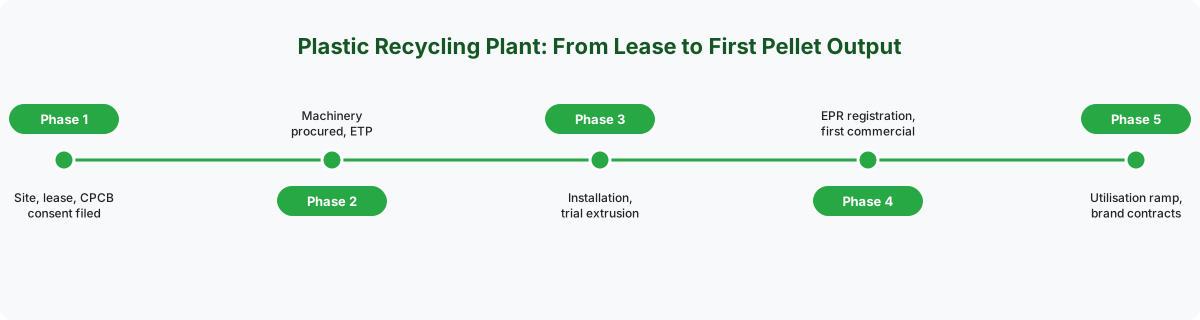
How to start plastic recycling business operations from idea to first invoice is a 6-9 month build for a small-to-medium plant in India. The sequence below is opinionated — it puts contracted demand and licences ahead of machine procurement, which is the opposite order most first-time founders follow. The reason: machinery is the easiest line item to fix mid-project; offtake contracts and CPCB approvals are the hardest, and a plant sitting on installed equipment without a customer or consent is the most expensive failure mode in the sector.
- Market and polymer focus (weeks 1-3): Pick one or two polymers (PET, HDPE, LDPELDPELow-Density Polyethylene (resin code 4) — a soft, flexible thermoplastic used in carry bags and agricultural film, recycled primarily into bin liners, construction sheeting, and lower-grade packaging.Learn more about LDPE , PP, mixed flexibles), confirm supply density within a 100-150 km catchment, name 5-10 prospective input suppliers (MRFs, brand collection partners, scrap aggregators) and 3-5 prospective output buyers (granule traders, FMCG converters, fibre producers).
- Bankable plastic recycling business plan (weeks 3-7): Detailed Project ReportDPRDetailed Project Report — the comprehensive technical and financial document submitted to Indian banks and government agencies to appraise a new industrial project for loan or subsidy approval.Learn more about DPR (DPR) with 5-year P&L, capex schedule, sensitivity analysis and ROI math. This is what the bank, the SPCB and any potential investor will read first. The DPR section below covers the structure lenders actually want.
- Site finalisation (weeks 5-8): Lease or buy plot in an industrial cluster (MIDC, GIDC, KIADB, IDC) sized for current capacity plus 30-50% expansion buffer. Verify three-phase electricity availability, water connection, road width for 9m container ingress, and zoning permissions for red-category processing.
- Funding (weeks 6-10): Apply for MSME term loan (PMEGP, MUDRA up to ₹10 lakh, CGTMSECGTMSECredit Guarantee Fund Trust for Micro and Small Enterprises — a GoI/SIDBI trust that guarantees collateral-free loans to MSMEs from banks, enabling recycling entrepreneurs to access term loans without pledging personal assets.Learn more about CGTMSE for collateral-free up to ₹2 crore) and any state-level subsidies. Bank approval typically takes 60-90 days from clean documentation. Equity float for 30-40% of capex from founder/promoter; 60-70% debt is the typical structure.
- Statutory registrations (weeks 4-12, parallel): GST, Udyam (MSME), factory licence, fire NOCNOCNo Objection Certificate — a formal clearance from a regulatory body required before certain industrial activities or consents are granted.Learn more about NOC , trade licence, CTE from State Pollution Control Board. CTE must be in hand before machine installation can legally start.
- Machinery procurement and installation (weeks 10-22): Vendor selection (request 3-5 quotes per major equipment line), advance payment, manufacturing lead time, transport, civil prep, installation and alignment. Insist on vendor-led trial run with your actual feedstock — not vendor-supplied test material.
- Hiring and training (weeks 16-22): Plant manager (chemical/polymer engineer), 2 line operators per shift, 1 quality control technician, 1 weighbridge clerk. Vendor-led operator training during commissioning is non-negotiable; budget ₹1-2 lakh for it.
- CTO and EPR registration (weeks 18-26): Apply for CTO from SPCB after pollution control equipment (ETP, baghouse) is installed and operational. File EPR registration with CPCB in parallel — they are independent processes.
- Trial production and quality validation (weeks 22-28): Run first 50-100 tonnes of input through the full process, characterise output granule (MFI, density, colour, moisture), iterate machine settings. This phase typically reveals 10-20% of the design assumptions that need adjustment.
- First commercial contract and ramp (weeks 26-36): Sign first granule offtake contract, deliver first commercial batch, close payment cycle, then sequentially add the next 2-3 contracts to fill nameplate capacity. Most operators reach 60-70% of nameplate by month 9 and 85-95% by month 12-15.
Recycling business ideas adjacent to plastic that some founders evaluate alongside this build: paper, e-waste, tyre, biomedical and metal recycling — each has its own regulatory profile and capex curve. Starting a paper recycling business in India, launching an e-waste recycling operation, and setting up a tyre recycling plant in India follow a similar 6-9 month build cadence with different machine and licence specifics. For founders specifically scoping plastic recycling business ideas at low capex (₹20-50 lakh), the small-scale single-polymer route described here is the most common entry point and the one most easily expanded once the first line is profitable.
Plastic Types & Recyclability Guide: PET, HDPE, LDPE, PP & What Each Earns
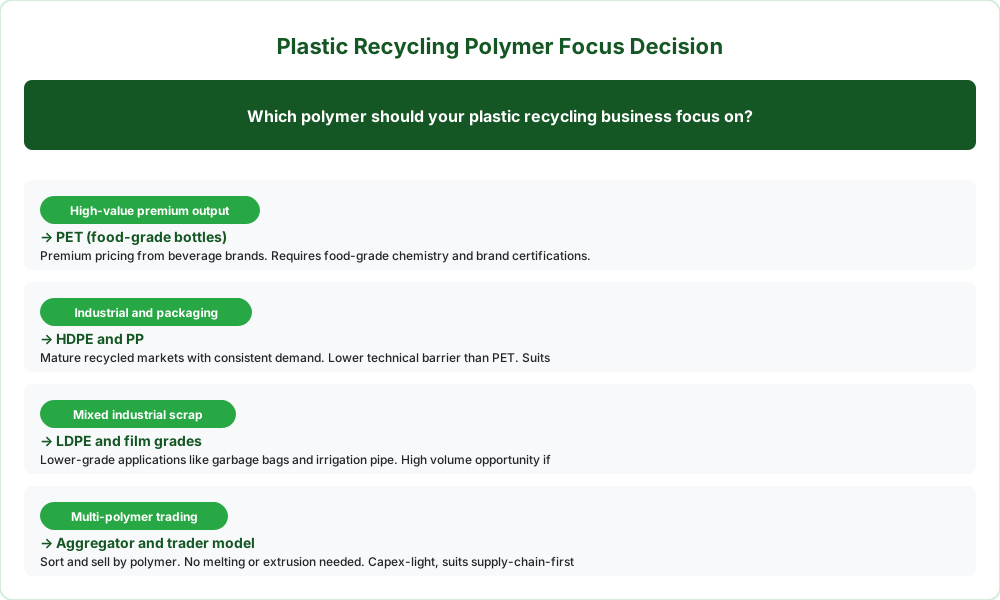
The seven Resin Identification Codes (RICRICResin Identification Code — the 1–7 number inside the triangle symbol on plastic products (1=PET, 2=HDPE, 3=PVC, 4=LDPE, 5=PP, 6=PS, 7=Other). Identifies plastic type for sorting; does NOT certify recyclability.Learn more about RIC ) developed by ASTM International (originally SPI in 1988) classify plastics by polymer chemistry. For a recycler, the RIC is a procurement decision tool — each code has a different supply profile, contamination tolerance, recyclability rate and end-market price band. Most formal processors in India focus on RIC 1 (PET), RIC 2 (HDPE) and RIC 4 (LDPE), because those three together account for roughly 60-70% of post-consumer plastic in Indian waste streams and have the cleanest secondary markets.
| Polymer | Resin Code | Common Products | Recyclability | Granule Price ₹/kg |
|---|---|---|---|---|
| PET (Polyethylene Terephthalate) | 1 | Beverage bottles, food packaging, polyester fibre | High — 95%+ mechanical, food-grade rPET possible | ₹50-90/kg (clear), ₹40-65/kg (mixed) |
| HDPE (High-Density Polyethylene) | 2 | Milk jugs, detergent bottles, pipes, crates | High — 90%+ mechanical, multiple cycles | ₹45-80/kg (natural), ₹35-60/kg (coloured) |
| PVC (Polyvinyl ChloridePVCPolyvinyl Chloride — a chlorinated plastic widely used in cable insulation and casings. Releases corrosive hydrochloric acid and dioxins when incinerated.Learn more about PVC ) | 3 | Pipes, vinyl flooring, blister packs | Low — chlorine content limits mechanical recyclingMechanical recyclingThe process of sorting, washing, shredding, and melt-extruding waste plastic into recycled pellets without breaking the polymer's chemical structure — the dominant recycling method for post-consumer plastic in India.Learn more about Mechanical recycling | ₹25-45/kg (segregated only) |
| LDPE (Low-Density Polyethylene) | 4 | Plastic bags, film, squeeze bottles, cling wrap | Moderate — 70-85%, film-specific lines required | ₹30-55/kg (clean film), ₹15-30/kg (mixed) |
| PP (Polypropylene) | 5 | Yogurt tubs, bottle caps, automotive parts | High — 85-90%, growing FMCG demand | ₹40-75/kg (natural), ₹30-55/kg (coloured) |
| PS (Polystyrene) | 6 | Foam cups, takeout containers, packaging foam | Low — bulky, contamination-sensitive | ₹20-40/kg (segregated) |
| Other (incl. PC, PLA, MLP) | 7 | Multi-layer packaging, bioplastics, electronics | Very low — chemical recycling only | ₹5-20/kg (limited buyers) |
PET is the highest-value polymer to recycle in India today. Clear PET bottles deliver food-grade rPET pellets at ₹60-90/kg, and FMCG offtake under recycled-content commitments by Coca-Cola, PepsiCo and HUL underwrites long contracts. The catch is that food-grade conversion requires an additional decontamination step (typically SSP — solid-state polycondensation) which adds ₹15-25 lakh of capex and 3-6 months of FSSAI approval. Most starting operators sell PET as bottle-grade flake or fibre-grade pellet rather than food-grade rPET. The full PET flakes complete guide covers the flake-grade economics in detail.
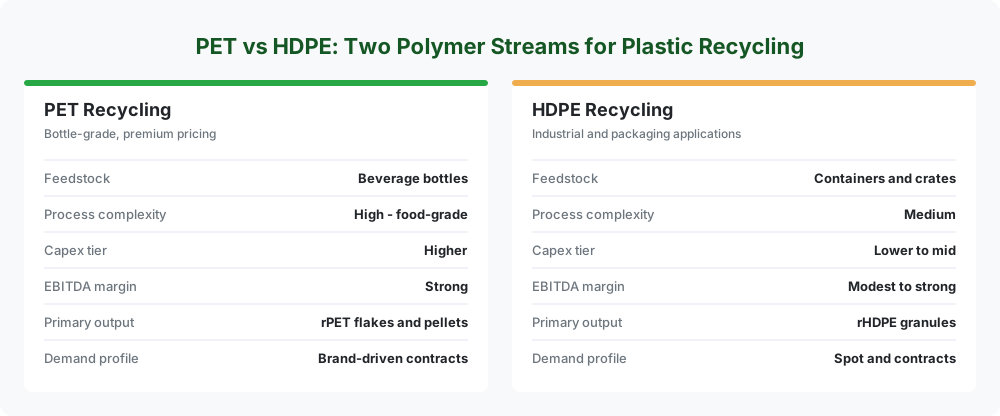
HDPE is the workhorse polymer for a multi-purpose recycler. Coloured HDPE (detergent bottles, motor oil containers) processes easily; natural HDPE (milk jugs) commands a premium because food-contact end-uses prefer it. Recovery yields of 90-95% are realistic on a dedicated HDPE line.
LDPE is film-heavy and the most contamination-prone of the bulk polymers. Plastic bags from kabadiwala feed are typically 30-40% non-target material (paper, food residue, mixed colours), which is why dedicated film washing lines exist as a distinct equipment category. LDPE film commands lower granule prices but volumes are large, and brand-led collection programmes are increasingly funding flexible-packaging recovery as part of EPR Category III obligations.
PP is the fastest-growing polymer to recycle in India because automotive interiors, FMCG packaging and consumer durables all use it in volume. Mechanical recycling delivers 85-90% yields on segregated PP. Pricing has firmed up 15-25% since 2023 as brand-owner demand for recycled PP has outrun supply.
PVC, PS and Other are the polymers most operators avoid in their first plant. PVC's chlorine content rules out most mechanical recycling routes (chemical recycling is technically possible but not commercially viable below 5-10 TPD). PS is bulky and brittle. Multi-layer packaging (RIC 7) accounts for an estimated 8-12% of post-consumer waste in India and is the hardest fraction to monetise — it lands in EPR Category III at the highest certificate prices but requires either co-processing in cement kilns or chemical depolymerisation, both of which sit outside the typical mechanical-recycling business model.
Plastic Recycling Plant Project Report (DPR): What Lenders & Subsidy Bodies Want
A Detailed Project Report (DPR) for a plastic recycling project is the single document that determines whether MSME lenders sanction your loan, whether state-level subsidy bodies clear your application, and whether private investors will look past the first page. Generic DPR templates downloaded as a plastic recycling business plan pdf free download will not clear scrutiny — banks have started screening for boilerplate language and rejecting applications that read like recycled templates rather than actual project work.
A bankable DPR for an Indian msme plastic recycling project runs 50-90 pages and contains seven sections that lenders explicitly check:
- Executive summary (2-3 pages): Capacity, polymer focus, capex, projected revenue, payback period, promoter background. Reviewer reads this first and decides whether to read the rest.
- Market analysis (8-12 pages): Sector size, demand drivers (EPR mandates, FMCG recycled-content commitments), supply-side analysis of input streams in your catchment, competitive landscape with at least 3 named comparator plants and their estimated capacities, pricing benchmarks.
- Technical specifications (10-15 pages): Polymer-by-polymer process flow, full equipment list with capacities and specifications, plant layout drawing, utility load (electrical, water, compressed air), pollution control equipment, manpower deployment.
- Financial model (12-18 pages): 5-year projected P&L with month-by-month detail for year 1 and quarterly for years 2-5, capex schedule, working capital cycle, balance sheet, cash flow statement, debt service coverage ratio (DSCR), break-even analysis. DSCR below 1.5 typically triggers additional collateral demands from lenders.
- ROI and sensitivity analysis (3-5 pages): IRR, NPV at standard discount rates, payback period, sensitivity to input cost (±15%), output price (±10%), capacity utilisation (60% / 75% / 90%). Reviewers look for whether the numbers stay solvent under stress.
- Implementation schedule (2-3 pages): Gantt chart from sanction to first revenue, milestone-based disbursement schedule (which is how MSME loans are released — against verified progress, not as a lump sum).
- Compliance and risk (5-8 pages): Statutory licence status, environmental risk assessment, raw material procurement risk, market risk, sensitivity-tested mitigation plans.
Lenders care most about three numbers in the financial model: capex-to-revenue ratio (typical target: 1:1 to 1:1.5 for plastic recycling), DSCR (target 1.5+), and break-even utilisation (target ≤55-65% of nameplate). A DPR with all three in the comfortable zone clears most MSME bank desks; numbers outside those bands face additional collateral or guarantor demands.
For founders without in-house financial modelling capability, connect with vetted DPR and project finance consultants on My Waste Solution — the directory lists consultants by sector experience (specifically plastic, e-waste, biomedical, hazardous waste) and average DPR-to-sanction conversion rate. Cost for a full plastic recycling project DPR runs ₹50,000-2,00,000 depending on plant size and turnaround, and a well-prepared DPR typically lifts loan sanction probability by 30-50% over a self-prepared submission.
Government Schemes & Subsidies for Plastic Recycling Businesses (2026)
Government schemes for plastic recycling business operators in India fall into four buckets: MSME credit support, sector-specific subsidies, infrastructure grants, and indirect benefits via GST and EPR policy. Most first-time founders use 2-3 of these in combination — the schemes are designed to layer (e.g., a PMEGP grant on top of a CGTMSE-backed term loan), and the difference between a founder who knows the stack and one who applies to one scheme is often 15-25% of project cost.
PMEGP (Prime Minister's Employment Generation Programme): Margin money subsidy of 15-35% of project cost (higher for rural and special category applicants) on projects up to ₹50 lakh in manufacturing. Plastic recycling explicitly qualifies under the manufacturing category. Application is through KVIC, KVIB or DIC; turnaround is 4-6 months from sanction.
MUDRA (Pradhan Mantri MUDRA Yojana): Term loan up to ₹10 lakh without collateral, split into Shishu (≤₹50,000), Kishore (₹50K-5L) and Tarun (₹5L-10L). For small-scale recyclers buying initial machinery this is the most accessible first tranche of debt.
CGTMSE (Credit Guarantee Fund Trust for Micro and Small Enterprises): Collateral-free credit guarantee up to ₹2 crore (raised from ₹1 crore in 2023) for MSME term loans. CGTMSE covers 75-85% of the loan default risk, which is what enables bank lending to first-time founders who don't have ₹50 lakh+ of pledgeable property.
SIDBI (Small Industries Development Bank of India): Specialised refinance for green/sustainability projects under the SIDBI Green Finance Scheme. Interest rates run 1-1.5 percentage points below standard MSME rates. Plastic recycling qualifies as a green project.
State-level subsidies: Most industrially active states layer additional benefits on top of central schemes. Maharashtra offers capital subsidy under the Industrial Promotion Subsidy for MSMEs in backward districts. Gujarat's Industrial Policy 2020 includes specific support for waste-to-resource units. Tamil Nadu, Karnataka and Telangana have similar packages with varying capex subsidy percentages (10-25%) and interest subvention windows (1-3% for 5-7 years).
Plastic Park scheme: The Ministry of Chemicals & Fertilizers funds dedicated Plastic Parks with shared infrastructure (effluent treatment, common testing labs, packaged utilities). Plots in operational parks (e.g., Tamot in MP, Tinsukia in Assam) lease at 30-50% below standard industrial rates and bundle pollution-board clearances at the park level.
CPCB Plastic Waste Management Grants: Project-specific funding for innovation in mechanical and chemical recycling, accessed through occasional EOI calls on the CPCB website. Sizes vary; typical grants ₹10-50 lakh for capacity addition or technology pilots.
GST input credits: Recycled plastic granules attract 12% GST (HSN 3915), input materials and machinery attract 18% GST — the difference is recoverable as input tax credit, materially improving working capital for compliant operators.
EPR certificate revenue: Not a subsidy in the formal sense but the most significant policy-enabled revenue stream — ₹2-15/kg of additional realisation on certified recycled material, depending on polymer category, as covered in the licences section above.
Most successful founders apply for PMEGP + CGTMSE + state subsidy as a package, then layer EPR registration once the plant is operational. The combined effect can lift project IRR by 5-10 percentage points versus a self-funded build.
FAQs: Plastic Recycling Business in India
Four questions Google's People Also Ask box surfaces most frequently for plastic recycling business queries from Indian founders. Direct answers are below — each one links back to the relevant deep-dive H2 above where the full reasoning, ranges and references sit. The answers here are deliberately compressed to 80-100 words so they read cleanly as featured-snippet candidates; treat them as quick reference rather than as substitutes for the full analysis upstream.
How profitable is the plastic recycling business?
Yes — a well-run formal plastic recycling plant in India operates at 15-25% gross margins and 8-15% net margins, with capex payback in 2.5-4 years. The variance is driven by input cost discipline (sorted MRF feed at ₹15-30/kg beats spot scrap at ₹35-50/kg), recovery yield (95%+ on a single-polymer line versus 70-82% on contaminated mixed feed), and the share of revenue coming from EPR credits versus granule sales alone. Is plastic recycling business profitable in india for first-time operators? Yes, conditional on those three levers — see the profitability H2 above for the unit economics by plant size. See full profitability breakdown on Adhara Viveka
How much does 1 kg of plastic waste cost in India?
1 kg of plastic waste in India costs ₹8-50 depending on polymer type, segregation quality and source. Approximate price bands by source and polymer below: Get real-time polymer pricing on Adhara Viveka
| Source / Polymer | Price band (₹/kg) |
|---|---|
| PET bottles (clear, segregated) | ₹25-40 |
| HDPE containers (milk, shampoo bottles) | ₹30-50 |
| LDPE film and bags (clean) | ₹15-30 |
| PP rigids (caps, tubs) | ₹20-40 |
| Mixed plastic waste (kabadiwala lots) | ₹5-15 |
| Branded collection (chain-of-custody) | 10-20% premium over spot |
MRF and brand-led collection is more expensive than informal kabadiwala sourcing but delivers higher recovery yield and EPR-eligible documentation, which usually offsets the per-kg premium.
What does a 1-ton plastic pyrolysis plant cost in India?
A 1 TPD (tonne per day) plastic pyrolysis plant in India costs ₹40-80 lakh; a 5 TPD plant runs ₹1-3 crore; a 10 TPD plant ₹3-7 crore. The capex spans wider than mechanical recycling because pyrolysis has high-pressure reactors, condensers and condensate handling — none of which mechanical recycling needs. How much investment required for plastic recycling plant via the pyrolysis route is therefore typically 1.5-2.5x the equivalent mechanical recycling capex. Pyrolysis converts mixed and contaminated plastic into pyrolysis oil (used as industrial fuel), syngas and char — economics depend heavily on the prevailing diesel/furnace oil price, since that's what your output substitutes for. Get vendor quotes via MWS marketplace
Which country recycles 99% of its plastic waste?
No country recycles 99% of its plastic waste specifically. The 99% figure is most often associated with Sweden, which sends roughly 99% of its total municipal solid waste away from landfill — but that figure includes ~50% material recycling and ~49% energy recovery (waste-to-energy incineration), not 99% mechanical plastic recycling. Norway recycles ~97% of PET bottles via its deposit-return scheme, the highest single-stream rate globally. Germany recycles ~46% of all plastic packaging. India's formal plastic recycling rate sits at an estimated 25-30%. The accurate framing: leading-jurisdiction plastic recycling rates are 40-60%, not 99%. Learn India's path to similar rates on Adhara Viveka
From research to action.
Three ways to move forward.
Other recycling businesses you might consider
Plastic isn't the only waste-stream worth starting a business around. Browse our guides on adjacent recycling sectors.
References
- [1]Annual Reports on Implementation of Plastic Waste Management Rulescpcb.nic.in
- [2]India Plastic Recycling Market — USD 4,090.8 Million (2024) projected to USD 6,933.2 Million by 2033 (CAGR 5.22%)www.custommarketinsights.com
- [3]Plastic Waste Management Rules and 2022 EPR Amendmentcpcb.nic.in
- [4]Waste pickers in India's informal sector contribute up to 80% of plastic waste collectionwww.indiawaterportal.org
- [5]2023 Environmental Update (recycled content commitment)www.coca-colacompany.com
- [6]How Unilever is tackling plastic waste — sustainability commitmentswww.unilever.com