


What the Numbers Actually Say About India’s Battery Recycling Business (2026)
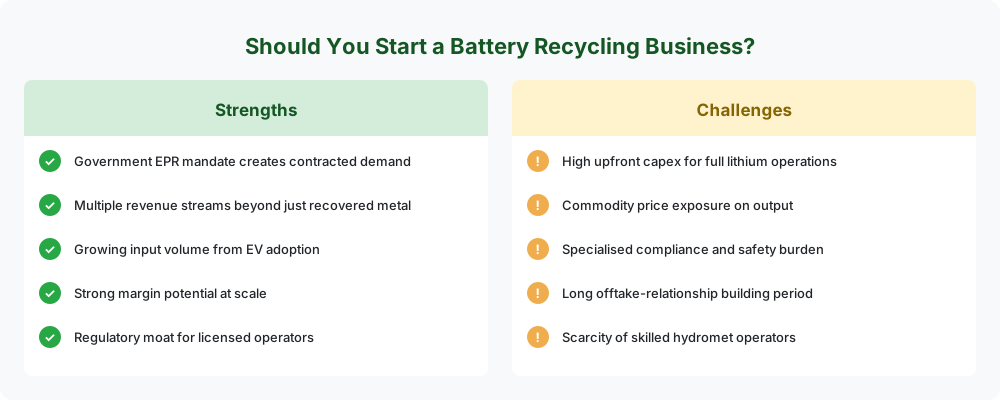
A battery recycling business in India runs on three numbers an entrepreneur has to internalise before signing a single lease — chemistry mix, EPR cost in the operating model, and recovered-metal pricing. Get any one of them wrong and a plant that looks profitable on a spreadsheet bleeds working capital by month six. Get all three right and the operating margin is structurally higher than almost any other Indian recycling vertical at the same capex tier.
India generated roughly 1.4-1.6 lakh tonnes of waste batteries in FY 2024-25 across lead-acid, lithium-ion, nickel-cadmium and other chemistries, and the trajectory is steep — lithium-ion volumes alone are projected to grow at 30-35% CAGR through 2030 as the country’s EV fleet hits the end of its first lifecycle. That is the headline number. The deeper number is that less than 30% of waste batteries currently move through the formal recycling channel; the rest are handled by informal aggregators, which means the formal opportunity has tailwinds from regulation (Battery Waste Management Rules 2022 mandate EPR), from OEM pressure (EV makers need traceable take-back chains), and from rising metal prices for cobalt, nickel and manganese in global commodity markets. Globally, the broader e-waste and battery picture is tracked in detail by the UNITAR Global E-Waste Monitor 2024, which puts India among the top three e-waste generators worldwide alongside China and the United States.
The current market is structurally underserved. Formal-channel recyclers are running at 60-75% utilisation against installed capacity — capacity that is itself only ~35% of what the BWM 2022 EPR targets will require by 2028. That gap between formal capacity and regulated demand is the strategic opening every new entrant is reading.
Key takeaways before you read further:
- Investment range: ₹5 lakh for a pure collection-only operation, ₹40-80 lakh for a small-scale dismantling plant (1-2 TPD), and ₹1.5-2 crore for a mid-scale plant with hydrometallurgical capability. All-in costs including land and approvals typically run 30-40% above the equipment-only quote.
- Payback window: typically 2.5-4 years for a well-run plant, conditional on input procurement discipline and recovered-metal sales. Plants that do not lock in a corporate take-back contract by month 18 trend toward the longer end of that range.
- EPR licence: non-negotiable. Plant Wise Processor (PWP) registration on the CPCB EPR portal under batteries recycling rules takes 4-8 months and gates everything downstream — including EPR certificate revenue, which can contribute 20-35% of operating margin.
- Profit per kg: ₹8-15 per kg of lead-acid scrap input, ₹25-60 per kg of lithium-ion scrap input — the gap is what makes chemistry choice the central economic decision. Most successful operators run hybrid models that use lead-acid cash flow to finance lithium-ion expansion.
- Working capital: sized at 90 days of input cost, not 60. This single line item is where most first-time operators under-budget, and it is the most common reason new plants stall at 70% utilisation in year two.
This guide is the honest version of the opportunity — capex tiers, EPR mechanics, profit per kg by chemistry, where to set up, who you are competing against, and how the better operators handle the inevitable headaches. If you are researching how to start a battery recycling business, the next sections cover what you actually need to know, in the order the decisions get made. The battery lifecycle inside a plant is short — six to ten weeks from input bin to outbound metal. The lifecycle of a recycling business is long, and the early decisions compound for years. This is a sector for operators willing to do honest waste management at industrial scale, not for anyone looking for a quick green-economy story.
Battery Types and Market Demand — Lithium-ion, Lead-Acid, EV and Beyond
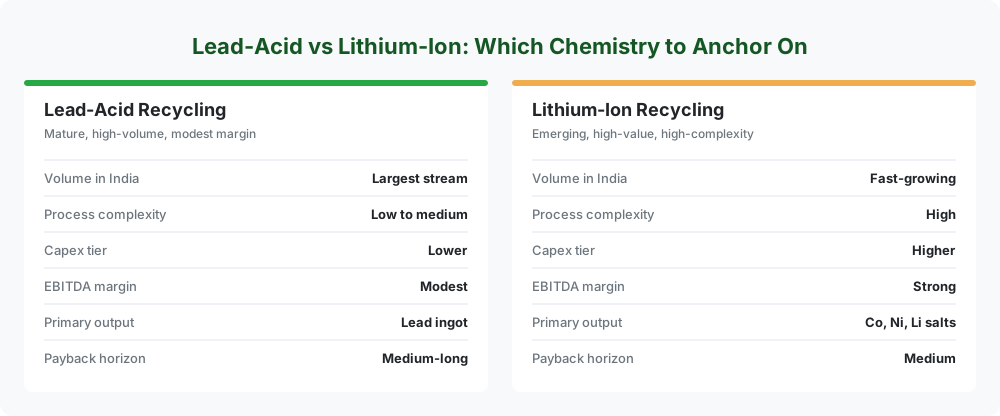
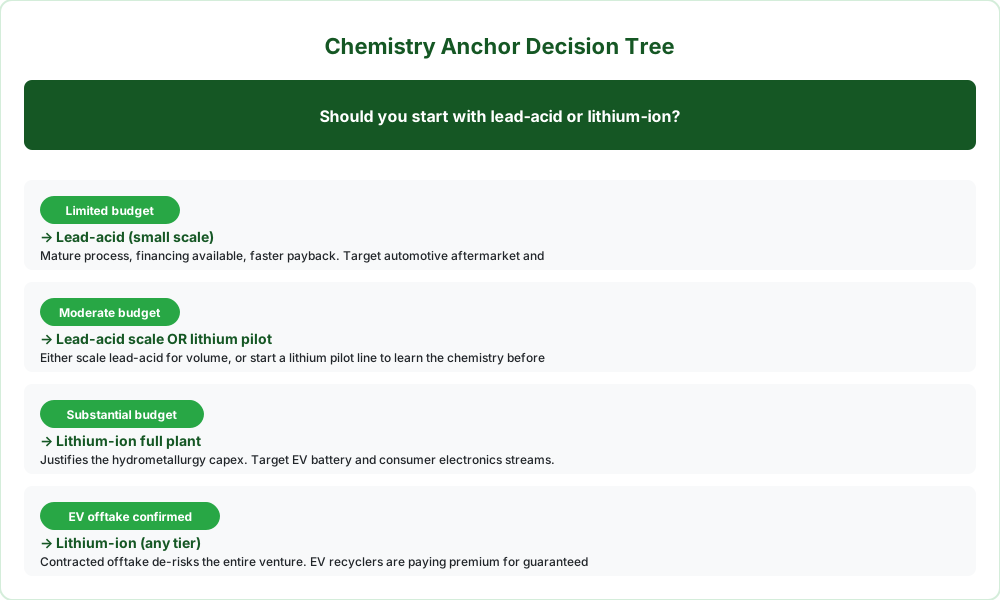
The single biggest call an operator makes is which chemistry to anchor the plant around. Batteries recycling in India breaks roughly into four input streams — lead-acid (70%+ of current waste tonnage but maturing in margins), lithium-ion (smaller current tonnage but the steeper growth curve), nickel-cadmium and nickel-metal-hydride (niche, mostly industrial), and small-cell button batteries (low priority for a startup). Each chemistry has a different recovery process, capex profile, EPR target, and end-buyer for cobalt, nickel, manganese, lead and other recovered materials — so a single plant for all of them rarely makes financial sense. The broader landscape of consumer-electronics chemistries that overlap with battery waste is covered in our guide to types of e-waste, which provides useful upstream context for any operator sourcing batteries through e-waste channels.
| Chemistry | Indian Waste Volume (FY 2024-25, est.) | Recovery Value Tier | Demand Trajectory through 2030 |
|---|---|---|---|
| Lead-acid (automotive + stationary) | ~1.0-1.2 lakh tonnes | Medium — lead ingot ₹150-185/kg | Flat to mild growth |
| Lithium-ion (consumer + EV) | ~25,000-35,000 tonnes | High — black mass at ₹80-220/kg | 30-35% CAGR; EV pipeline dominant by 2028 |
| Nickel-cadmium / NiMH | ~5,000-7,000 tonnes | Medium — nickel-driven | Flat; legacy industrial |
| Button cells & misc | <2,000 tonnes | Low — silver oxide niche | Not a first-plant choice |
For operators who want to validate market assumptions and chemistry-segment forecasts before committing capital, Adhara Viveka publishes detailed battery-recycling sector intelligence — TAM modelling for lithium-ion and lead-acid through 2030, the EV battery waste pipeline projection, formal-versus-informal share, and chemistry-segment demand maps for India. The next two H3 sections break down the lithium battery recycling business margin math and the automotive battery recycling on-ramp lead-acid plants are anchored on.
Lithium-ion Battery Recycling — Where the Future Margin Lives
Lithium-ion is the chemistry where most new capital is going in 2026, and the reason is simple — the recovered metals carry real value. A typical EV battery pack at end-of-life yields 35-45% black mass by weight, and that black mass contains 5-12% cobalt, 15-25% nickel, 3-8% manganese, and 4-7% lithium carbonate equivalent. At current Indian aggregator prices (₹80-220 per kg for the black mass itself, depending on cobalt richness), a 1 TPD lithium-ion plant processing ~300 tonnes a year of mixed input can generate ₹2.5-4 crore in recovered-metal revenue before EPR certificate sales are layered on top.
The catch is capex. A lithium battery recycling business with hydrometallurgical capability — leaching, solvent extraction, precipitation — requires ₹1.2-2 crore for equipment alone, plus ₹40-70 lakh for site preparation, effluent treatment and BIS-compliant safety infrastructure. Plants that skip the hydrometallurgical step and sell black mass directly to a downstream refiner can start at ₹40-60 lakh, but they earn ₹40-60% less per tonne of input than a vertically integrated operator.
The ev battery recycling business opportunity is the version of this story that gets the most press, and it is real — Tata Motors, Ola, Ather and the larger e-2W players are signing take-back agreements with recyclers, and the EV pipeline alone is projected to add ~80,000 tonnes of lithium-ion waste annually by 2029. But operators looking at the EV-focused entry path need to understand that EV pack disassembly is dangerous (thermal runaway risk during dismantling), regulated (BWM 2022 has specific EV battery handling clauses), and capex-heavy. Most new operators start with consumer lithium-ion (laptops, smartphones, power banks) where the lithium-ion batteries are smaller, safer to handle, and the supply is more diffuse but more accessible.
The precious metals recovery yield ceiling on lithium-ion in India sits around 92-95% for well-run hydrometallurgical plants and 75-85% for mechanical-only operations — the difference is what pays back the higher capex. For any operator evaluating a lithium battery recycling business in 2026, the recovery-yield gap is where execution either earns or destroys the higher margin per kg.
Lead-Acid Battery Recycling — The Volume Workhorse
Lead-acid recycling — handling spent lead acid batteries from cars, two-wheelers, inverters and industrial UPS — is the chemistry most first-time operators should start with. The reasons are commercial, not technical. Lead-acid still represents 70%+ of India’s waste battery tonnage, the process technology is mature (smelting + acid recovery is a 50-year-old playbook), the equipment is cheaper, the end-market is liquid (every secondary lead smelter in the country is a buyer), and the working-capital cycle is short — six to ten weeks from scrap intake to lead ingot sale, against twelve to twenty weeks for lithium-ion plants.
A lead-acid recycling plant at 2 TPD capacity needs ₹35-55 lakh in equipment (battery breaker, separator, smelter or rotary furnace, refining kettle) plus ₹15-25 lakh in site prep and effluent treatment for the acid neutralisation stage. Recovery yield on lead is high — 92-96% of input weight comes out as saleable lead ingot, and the polypropylene case material adds a 5-7% revenue stream as recycled plastic granules.
The economics on lead-acid look like this for a 2 TPD plant: input scrap costs ₹65-85 per kg (paid to dealers or aggregators), recovered lead ingot sells at ₹150-185 per kg, so the gross margin per kg of input is ₹12-25. After labour, energy, freight, smelting consumables and EPR cost layering, the net margin sits at ₹6-11 per kg of input — which on 600 tonnes a year is ₹36-66 lakh of operating profit before working-capital cost. Lead-acid will not make a recycler rich quickly, but it pays the bills while a lithium-ion expansion is being financed. Most successful Indian operators run a hybrid model where lead-acid funds the cash flow and lithium-ion absorbs the incremental capex. The automotive battery recycling segment specifically (vehicle SLI batteries, replacement-market scrap) is where lead-acid batteries recycling volume is most concentrated and easiest to source.
Battery Recycling Plant Cost in India — ₹5 Lakh to ₹2 Crore Tier Breakdown
The battery recycling plant cost in India ranges from ₹5 lakh for a pure collection-and-aggregation operation to ₹1.5-2 crore for a mid-scale facility with hydrometallurgical processing capability — and the right tier depends entirely on which chemistry you anchor on, how much input you can secure in year one, and whether you have an offtake agreement with a downstream refiner. First-time operators consistently over-estimate the capex they need and under-estimate the working capital. The breakdown below covers the three tiers most new entrants actually consider.
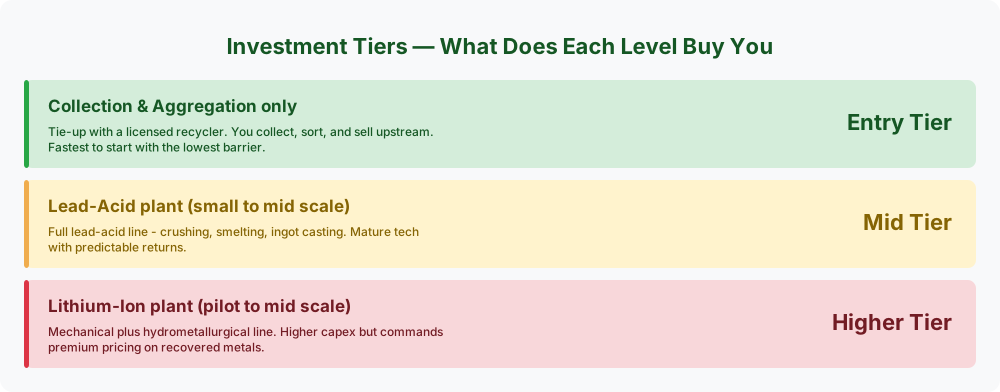
| Tier | Capacity (TPD) | Capex Range (₹) | Equipment List (Indicative) | Working Capital (₹) | Payback Window |
|---|---|---|---|---|---|
| Collection & aggregation only | 0.5-1 TPD intake | ₹5-15 lakh | Weighing, segregation, storage bins, transport vehicle, basic safety gear | ₹8-15 lakh | 18-30 months |
| Small-scale dismantling facility (lead-acid focused) | 1-2 TPD | ₹40-80 lakh | Battery breaker, polypropylene separator, rotary furnace or smelter, refining kettle, basic effluent treatment | ₹25-45 lakh | 30-48 months |
| Mid-scale facility (lithium-ion + lead-acid hybrid) | 3-5 TPD | ₹1.5-2 crore | Above + hydrometallurgical leach tanks, solvent extraction line, BIS-compliant lab, fire suppression, full ETP | ₹60 lakh — 1.2 crore | 36-54 months |
The numbers above are equipment + site preparation only. They do not include land (₹15-50 lakh depending on cluster), licence and consent fees (₹3-8 lakh across CPCB, SPCB, BIS, fire), or pre-operative legal and project consultancy (₹2-5 lakh). Folding in these line items, the realistic all-in battery recycling business cost for the mid-scale tier lands at ₹2.2-2.8 crore — not the ₹1.5-2 crore the equipment quote alone suggests. For a small-scale operation the equivalent all-in battery recycling business cost typically runs at ₹65 lakh — ₹1.1 crore once land, approvals and pre-operative are layered on top of equipment.
Working capital is the line first-time operators almost always under-budget. A 2 TPD lead-acid facility turns its working capital roughly six times a year, but those six turns each require ₹25-45 lakh in committed cash. That cash is locked up between paying scrap dealers (often in 7-15 day cycles) and getting paid by lead smelters (often in 45-60 day cycles). Plan for at least one full 60-day cycle worth of working capital before commissioning, plus another half-cycle of contingency for delayed receivables — which almost always happen in the first six months of commercial operation as customer relationships are still being built.
For operators evaluating battery recycling plant cost against revenue expectations, three financing structures work well in India today. First, term loan + working capital from a public-sector bank (collateral-heavy but cheapest, all-in 11-13% blended cost). Second, equipment leasing from NBFCs like SREI or L&T Finance (faster turnaround but 200-300 bps more expensive than bank credit). Third, the SIDBI Stand-Up India / MUDRA route for the smaller tier (₹50 lakh — ₹1 crore range, with a 6-9 month sanction cycle but lower collateral requirement). For a green-field operation, MoEFCC’s PRO-incentivised credit lines through state-level pollution-control boards are worth investigating — they exist on paper but disbursement is slow and the documentation burden is heavy.
Equipment vendor selection matters more than first-time operators expect. The battery breaker and rotary furnace combination for lead-acid carries roughly 65-70% of small-scale equipment capex; cheap imports save 20-25% on the line item but cost 30-40% more over five years in spares, downtime and yield loss. Established Indian fabricators (Bhanu, Pyrotech, custom Marathwada-cluster shops) and reputable Chinese imports (with full local AMC support) are the safer paths. Always negotiate vendor-supplied commissioning support, operator training, and a 12-month performance guarantee with a yield commitment — these clauses sound generic but they are where the actual money is during ramp.
A capex calculation is only useful when paired with realistic input and offtake assumptions. The next H2 (profit per kg) walks through what that ₹2 crore facility actually earns on each kg of input — which is where the case for the higher tier either holds together or falls apart. For a serious operator, the battery recycling business case is built bottom-up from the recovered-metal sale, not top-down from a capex spreadsheet. The capex tier that fits is the one where input flow can support 60%+ utilisation in year one — anything else is a financial forecast pretending to be an operating plan.
Profit per Kg — How Battery Recyclers Actually Make Money
Battery recyclers in India make money from four revenue streams stacked on top of each other — recovered-metal sales (the biggest), EPR certificate sales (the regulatory tailwind), polypropylene case recycling (a small but consistent add), and tipping fees from corporate take-back contracts (newest, growing fast). For a 2 TPD lead-acid plant the net profit per kg of input sits at ₹6-11; for a 2 TPD lithium-ion plant with hydrometallurgical capability it lands at ₹35-75 per kg of input. That gap is why every serious battery recycling business in India is now thinking about a lithium-ion expansion, even when lead-acid pays the current bills.
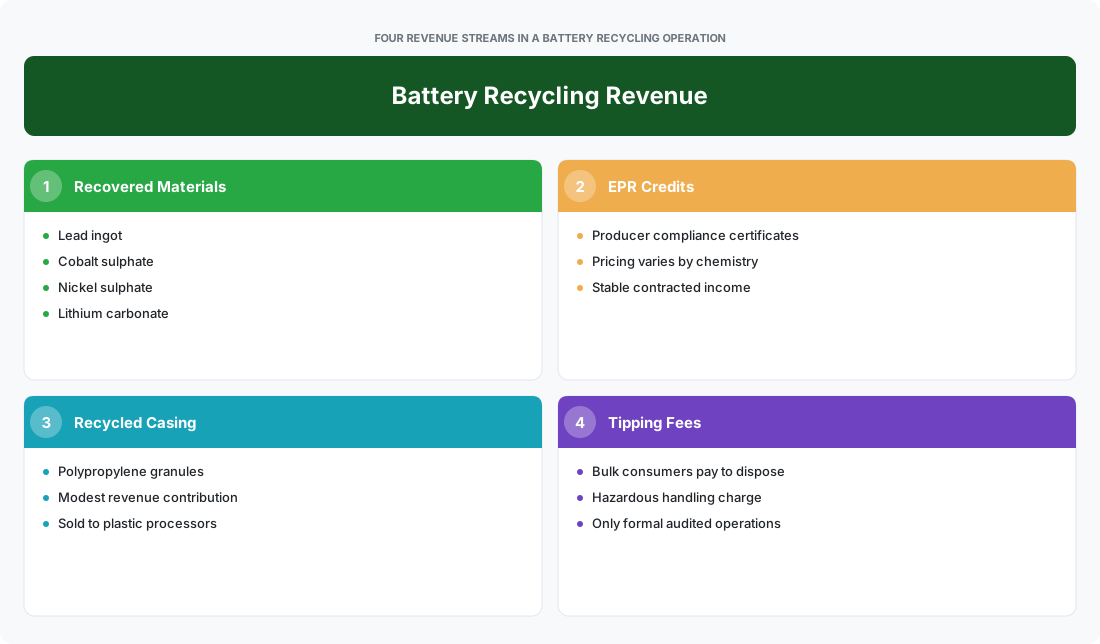
The math is worth walking through carefully. For lead-acid input at ₹70 per kg, a 2 TPD plant recovering 94% as lead ingot at ₹165 per kg generates roughly ₹155 in recovered-metal revenue per kg of input. Subtract scrap purchase (₹70), labour and energy (₹18-25), smelting consumables and refractory (₹6-9), freight (₹4-7), and EPR contribution (₹2-4) — you land at ₹40-55 in gross margin per kg, which after overhead and finance cost drops to ₹6-11 net per kg of input. On 600 tonnes a year that is ₹36-66 lakh of net operating profit — not breakthrough money, but predictable and bankable.
For lithium-ion the structure flips. Input cost is higher (₹120-180 per kg for mixed consumer lithium scrap), but the recovered material is far more valuable. A tonne of mixed lithium-ion scrap yields roughly 350 kg of black mass at ₹120-200 per kg market value, plus 80-120 kg of copper, 40-60 kg of aluminium, and 50-80 kg of recycled steel housing. Net per kg of input ranges ₹35-75 depending on cobalt content, recovery yield achieved, and whether the plant sells black mass to a downstream refiner or completes the hydrometallurgical step in-house.
| Revenue Stream | Recovery Yield % | Output Market Price (₹/kg) | Indicative Profit Margin |
|---|---|---|---|
| Lead ingot (from lead-acid) | 92-96% | ₹150-185 | ₹6-11 / kg input |
| Polypropylene granules (lead-acid case) | 5-7% | ₹55-85 | ₹1-3 / kg input |
| Lithium-ion black mass | 35-45% | ₹120-200 | ₹25-50 / kg input |
| Cobalt sulphate / nickel sulphate (hydrometallurgical) | 92-95% of contained metal | ₹450-700 (Co), ₹220-320 (Ni) | +₹10-25 / kg input |
| EPR certificate sale | per kg processed | ₹4-12 (varies by chemistry) | ₹3-9 / kg input net |
The EPR certificate revenue is the line that has changed the recycling economics most in the last 24 months. Under the Battery Waste Management Rules 2022, every PIBO (producer / importer / brand owner) is obligated to procure EPR certificates equal to their EPR targets — and those certificates are sold by registered PWPs (plant-wise processors, i.e., recyclers). At current EPR target levels the certificate market is running short of supply, which means certificate prices have firmed up at ₹4-12 per kg of capacity (chemistry-dependent). For a 2 TPD plant processing 600 tonnes a year, EPR sales alone can add ₹20-72 lakh of high-margin revenue — and that margin sits inside the circular economy infrastructure the policy is trying to build.
The fourth revenue stream — corporate tipping fees and take-back contracts — is small today but growing. Large EV makers, IT-asset disposal corporates, and telecom tower operators increasingly pay recyclers a small per-kg fee (₹3-8) to take used batteries off their hands with full traceability and EPR certificate transfer. Operators who build dedicated corporate-account capability can stack this on top of the recovered-metal income — and it is one of the highest-growth lines in any well-run battery recycling business P&L through 2028.
The cost stack that sits underneath these revenue lines deserves a closer look. For a 2 TPD lead-acid operation the operating cost breakdown per kg of input runs roughly: scrap procurement 60-65% (the single largest line, and the one most exposed to LME volatility), energy 8-12% (smelter natural gas or LPG dominant), labour 6-9% (small dedicated team plus shift overhead), consumables and refractory 4-7% (rotary furnace lining wear, refining-kettle additives), freight and logistics 3-5% (inbound scrap collection plus outbound ingot dispatch), and EPR compliance + audit 1-3% (portal fees, registered consultant retainers, annual recertification). Finance cost on the working capital and term loan adds another 8-12% before depreciation. The discipline most successful operators apply is to track each of these lines monthly against a model — drift on any single line by more than 2 percentage points is the early signal that operating discipline is slipping.
What is the price of battery scrap per kg in India? It depends entirely on chemistry — ₹65-85 per kg for lead-acid input, ₹120-180 per kg for mixed lithium-ion consumer scrap, ₹30-50 per kg for nickel-cadmium, and effectively zero for button cells (operators take them as a service, not an asset). The precious metals recovery and the recycled materials downstream economy is what makes batteries recycling a real business rather than a green-economy story.
EPR Licence and the Battery Waste Management Rules 2022 — What CPCB Actually Requires
The single biggest regulatory shift for the Indian battery recycling business in the last decade is the Battery Waste Management Rules 2022, notified by the Ministry of Environment, Forest and Climate Change (MoEFCC) in August 2022 and operationalised through the CPCB EPR portal in 2023-24. Under BWM 2022, every battery placed in the Indian market — automotive, industrial, portable, EV — is subject to Extended Producer Responsibility. Recyclers register as Plant Wise Processors (PWPs); producers and importers register as PIBOs; the EPR target percentage rises annually toward 90%+ by 2030. The interplay between PIBO obligations and PWP certificate supply is what generates the EPR revenue stream described in the previous section — and it also creates the compliance regime that gates every new entrant. The current text of the rules sits with other consolidated environmental notifications on the CPCB rules and regulations page, which is the canonical reference for any operator drafting their EPR application.
The framework breaks into two parallel approval threads — the EPR registration on the CPCB portal (covered in the next H3), and the conventional pollution-control consents and BIS certification (covered in the H3 after that). Both must be in place before a plant can legally process batteries. Operators looking at battery recycling companies in india that compete from a regulatory standpoint will notice the larger players (Attero, Gravita, Lohum) treat compliance as a core moat, not a cost. The hazardous waste handling rules layered on top of BWM 2022 mean even mid-scale operators need a dedicated EHS function from day one.
EPR Registration on the CPCB Portal — PIBO, PWP and the Step-by-Step Process
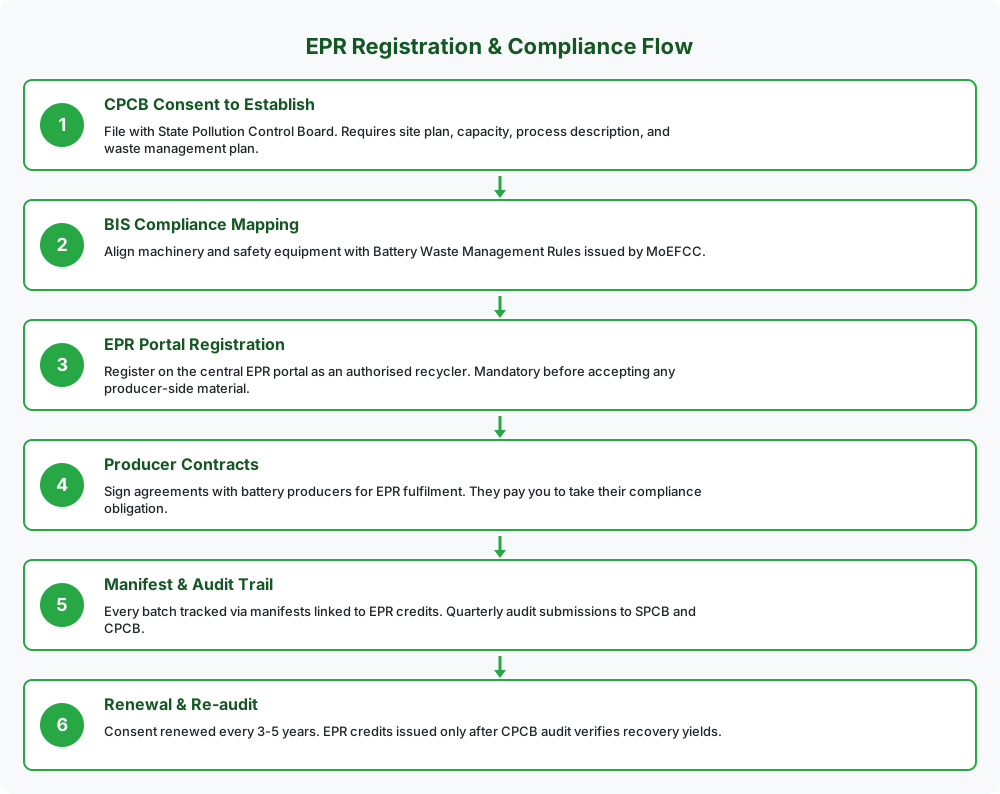
Plant Wise Processor (PWP) registration on the CPCB EPR portal is the foundational document for any Indian battery recycling business. Without an active PWP certificate, a plant cannot generate or trade EPR credits — which means roughly 25-40% of the operating revenue stack is closed off. Operators looking at battery recycling companies in india will notice every commercially active formal-sector player carries a current PWP registration.
The registration sequence is roughly:
- Pre-registration documentation: CIN / GST / PAN of the operating entity, MoA listing battery recycling as a permitted activity, factory licence under the Factories Act 1948, land ownership or lease deed, layout plan of the plant approved by a chartered engineer, and an audited capacity affidavit. Allow 30-45 days to assemble these cleanly.
- Account creation on CPCB EPR portal: https://eprbatterycpcb.parivesh.nic.in is the live portal. The plant operator creates a PWP account, uploads the documentation set, and pays the registration fee (currently ₹25,000-₹1,00,000 depending on declared annual capacity).
- Application review by CPCB: 45-90 days from submission. The application goes through technical review (capacity verification, layout adequacy, environmental impact pre-screening), document verification, and a site inspection. Common rejection reasons are inadequate effluent treatment provision, missing fire suppression, or layout that does not separate input storage from output storage.
- Site inspection: A CPCB or empanelled inspector visits the plant. Plants that pass on first attempt are the ones with effluent treatment, fire suppression, BIS-compliant safety gear, and trained operators visible during inspection. Plants that fail get a 30-60 day window to remediate.
- PWP certificate issuance: typically 4-8 months total from kickoff to active PWP status. The certificate carries a unique PWP ID that is used in all subsequent EPR certificate issuance and PIBO transactions.
- Annual returns and audit: Once active, the PWP submits quarterly processing returns and an annual audit on the portal. PIBOs (producers, importers, brand owners) procure EPR certificates from registered PWPs to meet their obligation, and the certificate trade settles bilaterally — the portal validates capacity but does not act as an exchange.
For a 2 TPD plant declaring 600 TPA capacity, expect ₹50,000-₹1,50,000 in registration and audit fees in the first two years. The bigger cost is the documentation effort — most successful operators retain a compliance consultant for the first registration cycle. Roughly 60-70% of first-time PWP applications are returned for clarification at least once before approval, so factor that into the project timeline.
CPCB Authorisation, SPCB Consent and BIS Certification — Sequencing the Approvals
EPR registration is necessary but not sufficient. A battery recycling business operating in India also needs three parallel non-EPR approvals — Hazardous Waste authorisation, SPCB Consent to Establish + Consent to Operate, and BIS certification for the output materials. Sequencing these correctly saves four to six months of project timeline.
The practical sequence most operators follow is:
- State Pollution Control Board Consent to Establish (CTE): Apply with project report, layout, effluent treatment design, and air emission control plan. CTE is required before any construction begins. Turnaround is 60-90 days under the standard SPCB workflow; faster under Single Window clearance in industrial-policy-friendly states (Gujarat, Maharashtra, Haryana, Tamil Nadu).
- Hazardous Waste authorisation under HOWMR 2016: Filed alongside the SPCB CTE — battery recycling is categorised as Schedule I hazardous waste handling. The authorisation specifies the waste categories permitted, maximum quantities, and the disposal route for residues. Without this authorisation in hand, no scrap can legally enter the plant.
- Building construction and equipment installation: Done under the CTE. This is also when the plant operator typically applies for the Factories Act licence and the fire NOC.
- Consent to Operate (CTO) from SPCB: The trial-run inspection. Operators run the plant for 2-4 weeks on limited input, demonstrate effluent compliance (pH, lead concentration in discharge, ambient air quality), and the SPCB issues CTO valid for 3-5 years.
- BIS certification for output materials: Lead ingot operators register under IS 27 or IS 13345 (depending on grade). Lithium-ion downstream operators selling cobalt or nickel salts navigate IS specifications for those products. BIS certification is not legally mandatory for every output, but it materially affects what buyers will pay — branded ingot at BIS-certified plants commands a 4-8% premium over non-certified material.
Total approval timeline runs 5-9 months in parallel with construction. Operators who try to compress this — say by starting trial production before CTO is in hand — risk SPCB closure orders that can cost 6-12 months of revenue. The shortest reliable path is to anchor the EPR registration thread and the SPCB CTE thread on the same project plan, and to retain a sector-experienced environmental consultant for the first cycle.
How Batteries Are Actually Recycled — A Technical Walkthrough
The recycling process splits by chemistry, but the high-level flow is the same — intake and sorting, mechanical processing, chemical or metallurgical recovery, and downstream refining. What changes is the specific technology, the safety envelope, and how the recovered materials are sold. A well-run battery recycling business treats this as a series of carefully monitored unit operations, not as a single black-box “recycling” step.
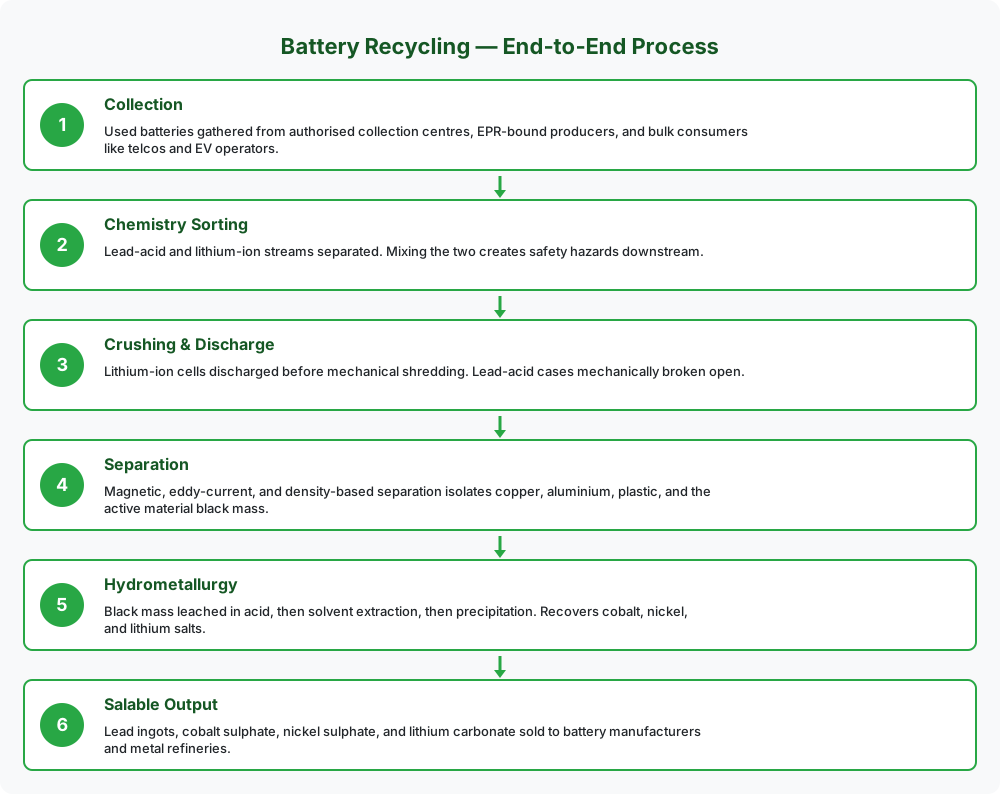
For lead-acid batteries, the flow looks like this:
- Intake and segregation: Batteries arrive from dealers, aggregators and corporate suppliers. They are weighed, logged in the EPR portal, and segregated by condition (intact, leaking, damaged). Damaged batteries route to a separate handling line.
- Battery breaking: A mechanical breaker splits the casing, drains the electrolyte (sulphuric acid) into a neutralisation tank, and separates the lead grids, paste, and polypropylene case.
- Lead smelting: Lead grids and paste go through a rotary furnace or short rotary furnace at 1,000-1,200°C. The output is impure lead bullion that requires further refining.
- Lead refining: Refining kettles bring the lead bullion to 99.5-99.97% purity by removing copper, tin, antimony and bismuth — these by-product metals are sold separately.
- Acid recovery and neutralisation: Drained electrolyte is either neutralised with lime (producing gypsum) or recovered as battery-grade sulphuric acid through purification — the second route is harder but more profitable.
- Polypropylene processing: Case material is washed, granulated and sold as batteries recycling output to plastic processors at ₹55-85 per kg.
For lithium-ion batteries the flow is longer and the safety envelope is much tighter:
- Discharge: Cells must be fully discharged before mechanical processing — typically by immersion in brine or controlled resistive discharge — to prevent thermal runaway.
- Mechanical shredding: Shredding inside an inert atmosphere (nitrogen or argon) produces black mass plus separable copper, aluminium and steel fractions.
- Black mass concentration: Magnetic and density separation removes the metallics; what remains is the cathode-rich black mass.
- Hydrometallurgical leaching: Black mass is leached in dilute sulphuric acid; cobalt, nickel, manganese and lithium enter solution.
- Solvent extraction and precipitation: Selective solvent extraction separates each metal; precipitation produces battery-grade cobalt sulphate, nickel sulphate, manganese sulphate and lithium carbonate — the recycled materials feed straight back into new cathode manufacturing.
- Residue handling: Leach residue is filtered, characterised as hazardous waste, and disposed at a TSDF (Treatment, Storage and Disposal Facility) — typically Ramky or Mahindra Waste-to-Energy facilities depending on geography.
The pyrometallurgical alternative (smelting lithium-ion at 1,400°C+ in a high-temperature furnace) is used by global majors like Umicore but is rare in India because of capex and emission control complexity. Most Indian operators in 2026 are running mechanical + hydrometallurgical, which has 92-95% recovery yield on contained metal and meaningfully lower capex than the pyrometallurgical route. Operators working across multiple recycling verticals will find a similar mechanical-plus-chemical pattern in tyre recycling plant setups in India, where the technology stack is conceptually adjacent even though the chemistry is entirely different.
Plant Setup and Location — Where to Build, How Much Space, Which Industrial Cluster
Location is the most under-discussed variable in any battery recycling business case. The right location lowers input procurement cost, shortens logistics cycles, eases regulatory inspection, and gives access to skilled operators. The wrong location adds 12-18% to operating cost from day one and never recovers. Five factors decide it.
Industrial cluster designation. The plant must sit in an area zoned for hazardous waste handling — typically a notified industrial estate under MIDC (Maharashtra), GIDC (Gujarat), SIPCOT (Tamil Nadu), HSIIDC (Haryana) or RIICO (Rajasthan). Setting up outside a notified estate is technically possible but the SPCB approvals take 2-3x longer, and many states will not issue CTE for hazardous waste plants in residential or mixed-use zones. The shortest path is a notified estate with existing hazardous-waste neighbours.
Space requirement. A 1-2 TPD lead-acid plant needs roughly 6,000-9,000 sq ft of covered area plus 3,000-5,000 sq ft of open storage for incoming scrap and outgoing material. A 3-5 TPD lithium-ion plant with hydrometallurgical processing needs 12,000-18,000 sq ft total, including dedicated zones for discharge, inert-atmosphere shredding, leach tank farm, ETP and finished goods. Plan for 20-30% additional headroom for expansion.
Proximity to OEM and dealer catchments. A battery recycling plant in an industrial cluster with car manufacturers, telecom tower operators, or large IT-asset corporates can secure 50-70% of its input through direct corporate take-back contracts, paying tipping fees rather than chasing dealer scrap. Maharashtra (Pune, Aurangabad, Nashik) and Tamil Nadu (Chennai, Hosur, Sriperumbudur) are the strongest auto-cluster options. Gujarat (Ahmedabad, Vadodara, Sanand) is rising fast on the EV side. Haryana (Manesar, Bhiwadi) has the legacy auto base. Karnataka (Bengaluru rural, Hosur border) sits at the lithium-ion EV intersection.
Logistics and utility infrastructure. Lead smelting needs reliable three-phase power (250-500 kVA load for a 2 TPD plant), water (~15-25 KLD for cooling and acid neutralisation), and natural gas or LPG for the rotary furnace. The plant also needs road access for heavy vehicles bringing scrap in and finished material out. Industrial estates that meet all three are limited; this is where pre-existing tenants serve as a proxy for infrastructure quality.
EHS and community envelope. Even inside a notified estate, the local SPCB pays close attention to lead recyclers because of the historical lead-emission cases (Patancheru and others). A battery recycling plant that invests in monitoring, regular emission testing, and community engagement spends 2-3% of revenue on EHS but avoids 6-12 month closure orders that effectively kill the cash flow. The e-waste and battery recycling sectors share this regulatory scrutiny in India — operators with weak EHS culture do not last in the formal channel. Operators evaluating a parallel e-waste recycling business setup in India will recognise the same EHS-first playbook, because both sectors fall under hazardous-waste authorisation.
The right answer is: a notified industrial estate, in an auto or EV cluster, with 12,000+ sq ft of fenced land, three-phase power, water, gas access, road access for heavy vehicles, and 4+ existing hazardous-waste tenants within the cluster.
Business Models and Franchise Options — Collection-Only, Full Plant, OEM Tie-up
Not every entrant to the Indian battery-recycling sector needs to build a full plant. Three operating models work today, each with a different capital profile and a different competitive position — and the right one depends on how much capital is available, how much sector experience the operator brings, and how patient the working-capital plan is.
Collection-and-aggregation only. The lowest-capex entry point — ₹5-15 lakh — focuses on building dealer relationships, corporate take-back contracts, and a reverse logistics network, then selling sorted scrap to a downstream PWP for processing. This is the right model for first-time operators in a Tier-2 city without an obvious industrial cluster nearby, or for operators who want to learn the input supply mechanics before committing to plant capex. The catch is that pure aggregators do not generate EPR certificates themselves (the certificate is issued to the PWP that processes the material), so the margin is thinner — ₹4-9 per kg of scrap aggregated, depending on chemistry. Successful aggregators eventually either build their own plant or sell into a long-term offtake arrangement with a major recycler.
Full recycling plant (independent). The ₹40 lakh — ₹2 crore tier described in the cost section. The independent operator buys scrap from aggregators and dealers, processes in-house, sells recovered metals to smelters or refiners, and registers as a PWP to capture EPR revenue. This model captures the full vertical margin but carries the full vertical risk — input procurement, working capital, processing yield, compliance, downstream pricing. Roughly 60-70% of formal-sector Indian recyclers operate this way as of 2026, and the better ones differentiate on chemistry focus (lithium-ion specialist vs lead-acid generalist) or on traceability technology (blockchain-backed EPR certificates command a 5-12% premium).
OEM franchise or tied recycler. A growing third model — Exide Loop, Amaron Plus, EV-OEM-tied take-back schemes (Tata, Ola, Ather), and the EPR aggregator franchises (Recyclekaro, Lohum, and BatX run partnership programmes). The franchisee gets brand pull for input procurement, a guaranteed offtake contract for recovered material, and shared compliance infrastructure — in exchange for a 15-25% margin haircut versus the independent model. The battery recycling franchise route is the right one for operators with limited sector experience or limited capital, and is the fastest path to formal-channel operation in a market where dealer relationships otherwise take 18-24 months to build. The battery recycling business model choice between franchise and independent often comes down to whether the operator can wait 18 months for organic input volume to ramp.
The ev battery recycling business segment is especially well-suited to a battery recycling franchise structure in 2026 — every major EV OEM in India is actively signing recycling partners, and the contracted volume comes with traceability guarantees that informal-channel scrap can never match. For operators starting from scratch, a 3-year franchise contract followed by a transition to independent operation (using the franchise period to build dealer relationships and capability) is the structurally lowest-risk path. The battery recycling business model question is ultimately about whether the operator is buying input flow with margin or buying brand pull with capex — both are valid, but only one fits any given starting position. Building a sustainable business in this sector is much easier when the input flow is contracted from day one rather than fought for in the spot market.
Operators evaluating franchise terms versus independent capex can find detailed sector intelligence on franchise economics and OEM partnership structures — capital efficiency comparison across collection-only, full-plant, and OEM-tied models, with India-specific case data and contract benchmarks on Adhara Viveka. The financial difference between models is bigger than most first-time operators assume.
Battery Recycling Companies in India — Who’s Already Operating and How They Win
The Indian formal-sector recycling market in 2026 is concentrated around eight or nine major operators plus 60-80 mid-scale plants and several hundred informal aggregators. Understanding what the leaders do well — and where they leave room — is essential before designing a competitive entry. The battery recycling companies in india currently leading the formal channel each occupy a distinct strategic position.
- Attero Recycling: The largest formal-sector player, dual-anchored on e-waste and lithium-ion batteries. Mid-scale hydrometallurgical capability, OEM partnerships with multiple EV makers, and brand recognition from media coverage. They win on operational scale and integrated downstream chemistry.
- Gravita India (listed): Lead-acid focused, multi-state presence with plants in Rajasthan, Tamil Nadu, Andhra Pradesh, and overseas operations. Wins on cost discipline and a long-standing dealer network — the textbook example of how lead-acid battery recycling companies in india scale through procurement.
- Lohum Cleantech: Lithium-ion specialist, focused on second-life applications plus recycling. Strong on EV OEM contracts and capital-markets credibility (multiple funding rounds from large climate-tech investors). Wins on the EV pipeline thesis and brand positioning.
- BatX Energies: Newer lithium-ion entrant, hydrometallurgical capability, expanding capacity rapidly through 2026. Wins on speed of execution and dedicated lithium-ion focus.
- Tata Chemicals (battery materials division): Industrial-scale lithium recovery, plus relationships with the broader Tata battery ecosystem (Tata Motors, Tata Power). Wins on captive-volume access through the group.
- Exide-owned recycling operations: Lead-acid focused, captive to the Exide manufacturing base, also operating Exide Loop as a brand-led take-back programme. Wins on closed-loop integration with battery production.
- Recyclekaro (Bengaluru): Mid-scale operator with strong EPR portal compliance reputation and corporate take-back programme — niche play that has worked.
- MSME-scale plants (60-80 in number): Distributed across Maharashtra, Gujarat, Tamil Nadu, Haryana and Rajasthan. Most are lead-acid focused, some hybrid. This is the layer a new entrant most directly competes with.
Operators looking at adjacent verticals — a plastic recycling business in India for example — will find the competitive structure broadly similar (a few large players plus a long tail of mid-scale operators), but the chemistry-specific moats in battery recycling are sharper than in the more commoditised streams.
Where do new entrants win against this established field? Three positions are still open in 2026. First, geography-specific specialists in Tier-2 industrial clusters that the majors do not directly serve — a well-run plant in Indore, Coimbatore, Bhubaneswar or Vizag can build dominant local catchment before the majors arrive. Second, chemistry-specific specialists at sub-mid-scale — a 1-2 TPD lithium-ion-only plant with strong hydrometallurgical yields and a tight regional cluster of EV partners can outperform a 3 TPD generalist on margin per kg. Third, traceability and compliance technology — operators building blockchain or QR-anchored EPR certificate trails are commanding pricing premiums from PIBOs who want audit-clean compliance. The battery recycling business opportunity in India is still wide enough for new entrants to find a defensible niche, but the operators who win are the ones who pick their position deliberately rather than entering as a generic competitor.
Building a Battery Collection Network — The Supply-Side Problem Most Operators Underestimate
Input procurement is the single hardest problem for any new battery recycling business. The plant capex gets the attention, the EPR licence gets the regulatory anxiety, but the operator who cannot fill the plant runs out of cash long before either of those matters. A 2 TPD plant needs roughly 600 tonnes of input scrap per year — and 600 tonnes does not arrive on a procurement portal. It comes from a battery collection network the operator has to build deliberately over 12-24 months.
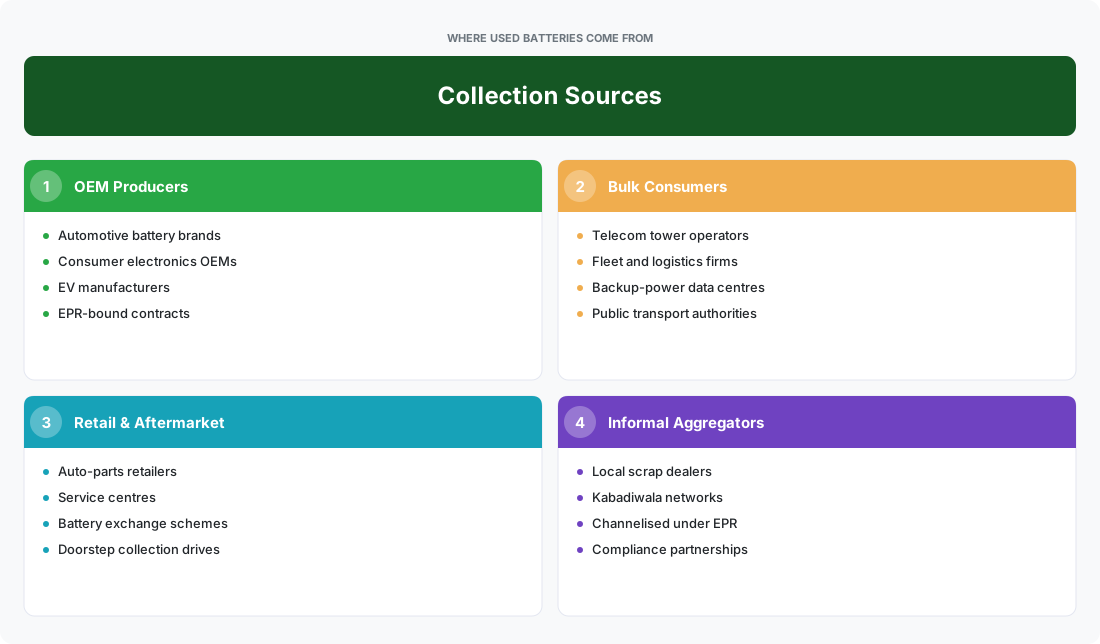
The five input channels worth building are:
- Battery dealer tie-ups: 80-150 independent dealers in the local catchment, paying spot rates on scrap turn-in. This is the legacy channel and still accounts for 40-60% of input for most lead-acid operators. Pricing is volatile (tracking LME); relationships are durable once built.
- Corporate take-back contracts: IT asset disposition (ITAD), telecom tower operators, OEM service centres, large fleet operators. Volumes are predictable, traceability is required, and contracts often run 12-36 months. The operator typically charges a tipping fee (₹3-8 per kg) plus collection logistics — and the corporate gets the EPR certificate to satisfy its CSR / compliance reporting.
- OEM-tied programmes: Exide Loop, Amaron Plus, EV-OEM take-back schemes. The operator either becomes a franchisee or wins a contract to handle regional volume. Margins are tighter but volume is guaranteed.
- Informal-sector aggregators (formalised): The kabaadi network that handles 60-70% of current Indian scrap volume can be a legitimate input channel if formalised through GST-registered intermediaries. Compliance risk is real — operators who buy without paper trail can lose their PWP certificate during audit.
- Online B2B marketplaces and exchange platforms: Smaller volumes today but growing. MyWasteSolution, BattRE Exchange, and a few region-specific platforms aggregate small dealer listings into single-window procurement.
The right channel mix depends on the plant tier. A small-scale lead-acid plant builds its first ~50% volume through dealer tie-ups and rounds out through corporate contracts. A lithium-ion plant typically goes corporate-first (because EV makers and IT corporates need traceability anyway) and adds dealer channels later for residual batteries recycling input. Cross-cluster procurement adds 8-15% to logistics cost but is the only way to stabilise input flow when local catchment is thin.
For operators who need to compress this 12-24 month build-out, verified lithium-ion battery recycling consultants and EPR experts listed on the MyWasteSolution marketplace can shortcut the dealer relationship and corporate-contract layer significantly — the consultants who specialise in this sector typically have pre-existing dealer maps and corporate-take-back templates that take an independent operator 6-12 months to build from scratch.
Common Challenges Operators Face — and How the Better Ones Solve Them
Every battery recycling business in India runs into the same five operational headaches. The better operators do not avoid them — they price them in and design the operating model around them. The following are the issues that consistently surface in operator reviews, board updates, and post-mortems across the sector.
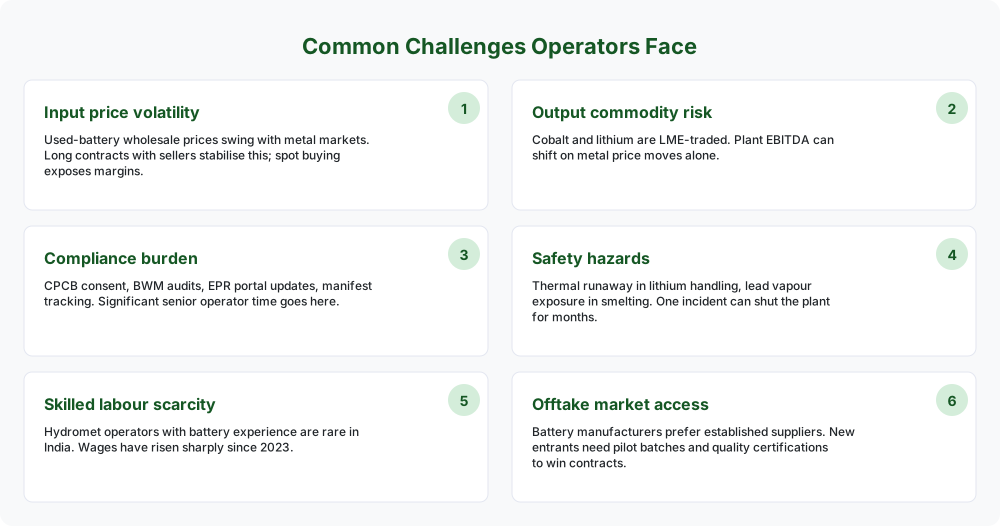
1. Input price volatility. Scrap pricing follows LME plus an Indian premium plus dealer-network frictions. A 12-15% movement in LME lead or cobalt in a quarter is normal, and operators who buy on long contracts without hedging take the full hit on inventory. The fix is short purchase contracts (7-15 days), monthly LME-linked repricing on dealer agreements, and a working capital buffer sized to absorb two adverse quarters.
2. Informal-sector price competition. The kabaadi channel pays in cash, does not collect GST, and skips most compliance overhead — so it can pay 8-15% more per kg of scrap than a formal operator. The fix is not to compete on price; it is to compete on traceability (corporate customers, EPR certificate buyers and EV OEMs all need formal-channel paper), on reliability (corporates want guaranteed pickup, the kabaadi cannot promise), and on EPR-certificate-linked offtake premiums.
3. EPR certificate price uncertainty. The certificate market is still maturing. Prices have ranged from ₹2 per kg in early 2024 to ₹12+ per kg in mid-2026 as PIBO compliance pressure has firmed. Operators who built their P&L assuming top-of-cycle EPR pricing get hurt when certificates correct. The fix is to model EPR as 25-35% of revenue, not 50%+ — that way, plant economics hold even when certificates trade at the low end.
4. Working capital cycles. Scrap dealers want cash in 7-15 days, lead smelters and cobalt buyers pay in 45-60 days. A 2 TPD plant locks ₹25-45 lakh in this gap continuously. Plants that ramp utilisation beyond 80% in year one without raising the working-capital line invariably run into payment delays, which then degrade the dealer network. The fix is to size the working-capital facility at 90 days of input cost, not 60.
5. Hazardous waste insurance and EHS exposure. Lead spills, lithium thermal events, ETP non-compliance — any one can trigger a closure order. Annual premiums for proper hazardous-waste handler insurance are 0.6-1.2% of plant turnover, and the better operators treat this as a fixed cost rather than a discretionary one. The environmental impact of a single incident — both regulatory and reputational — is several multiples of the annual premium.
None of these challenges are show-stoppers — they are simply the conditions under which an Indian battery recycling business operates. The operators who underperform are the ones who treat them as background noise; the ones who succeed build the operating model assuming each one will hit at least once a year.
FAQs on India’s Battery Recycling Business
Four questions come up in nearly every conversation with first-time operators evaluating a battery recycling business in India — and the answers are different in 2026 than they were even two years ago, mostly because the EPR certificate market under BWM Rules 2022 has materially reshaped the revenue stack. Each FAQ below is answered in plain terms, with the specific numbers that actually drive the decision and the specific conditions under which each number holds. The full reasoning for any answer sits in the relevant H2 above; this section is the quick-reference summary an operator can show to a co-founder, banker or potential consultant.
Is battery recycling profitable?
Yes — a well-run battery recycling business in India operates at 12-22% EBITDA margins with a 2.5-4 year capex payback, conditional on chemistry choice, EPR certificate participation, and recovery yield. Lead-acid plants deliver ₹6-11 net profit per kg of input on stable but moderate margins; lithium-ion plants with hydrometallurgical capability deliver ₹35-75 per kg on higher but more volatile margins. Operators who run hybrid models (lead-acid funding the cash flow while lithium-ion absorbs growth capex) outperform single-chemistry plants in their first three years. The unprofitable operators are typically the ones who under-budget working capital or who skip EPR registration — those two mistakes alone push net margins below 5%.
Which recycling business is most profitable?
Battery recycling sits in the upper-middle of the Indian recycling profitability table — above plastic recycling (3-7% EBITDA) and tyre recycling (5-10%), at par with e-waste recycling (15-25% on the metal-recovery side), and below precious-metal refining (25-35%, but very capex-heavy). Within battery recycling, lithium-ion with hydrometallurgical processing is the highest-margin sub-segment available to a mid-scale operator today, at 18-25% EBITDA when the EPR market is firm. Plastic and tyre recycling are bigger by volume but thinner by margin; precious-metal refining is more profitable per tonne but operates at a different scale of capital and regulatory complexity. For a ₹40 lakh — ₹2 crore entry point, lithium-ion battery recycling is the best margin-per-rupee-of-capex Indian recycling option in 2026.
What is the price of battery scrap per kg in India?
Battery scrap prices in India in mid-2026 sit in the following ranges, paid by formal-sector recyclers to dealers and aggregators: lead-acid scrap at ₹65-85 per kg (LME-linked, varies with lead complex moves), mixed consumer lithium-ion scrap at ₹120-180 per kg (cobalt-rich variants command the top of the range), nickel-cadmium at ₹30-50 per kg, and silver-oxide button cells effectively zero (recyclers take them as a free service). EV-grade lithium-ion battery packs (NMC / NCA cathode chemistry) trade higher, typically ₹180-280 per kg when traceability and EPR certificate transfer are part of the deal. Informal-channel pricing typically sits 8-15% above formal-channel pricing because of GST and compliance arbitrage — a structural price wedge most new operators have to navigate.
How do battery recyclers make money?
Battery recyclers monetise four revenue streams stacked together: recovered-metal sales (the biggest line — lead ingot for lead-acid plants, black mass or cobalt/nickel sulphate for lithium-ion plants), EPR certificate sales (the regulatory tailwind under BWM Rules 2022, contributing 20-35% of revenue at current certificate prices), polypropylene case recycling (a small but consistent add for lead-acid operators, ₹1-3 per kg of input), and corporate tipping fees from take-back contracts (newest but growing fast, ₹3-8 per kg). On a 2 TPD plant, the total revenue stack is roughly ₹4-9 crore per year depending on chemistry mix and utilisation — and net profit lands at ₹35 lakh to ₹2 crore against capex tiers of ₹40 lakh to ₹2 crore.
Starting Your Battery Recycling Business — Three Takeaways and the Next Step
A battery recycling business in India is a real opportunity in 2026 — not a green-economy talking point. The market is genuinely underserved (less than 30% of waste batteries flow through formal channels), the regulatory tailwind (BWM Rules 2022 EPR obligations) is now firmly in place, and the recovered-metal economics work even at sub-mid-scale. But the operators who succeed are the ones who internalise three specific lessons before they start.
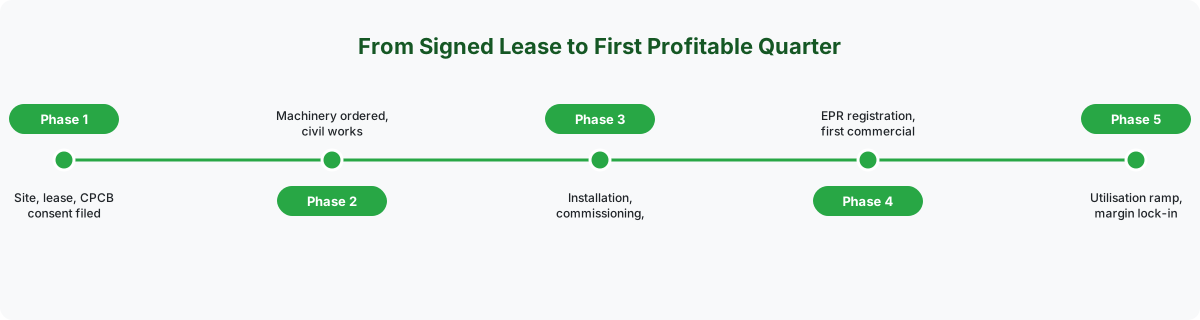
- Pick your chemistry deliberately, then commit. Lead-acid pays the bills with predictable working capital. Lithium-ion compounds margin with EV pipeline tailwinds. Hybrid models work but only when one chemistry is anchor and the other is growth — generalist plants under-perform both specialists.
- Treat EPR as gating infrastructure, not as a revenue add-on. The PWP registration determines whether ₹3-12 per kg of EPR certificate revenue is available or not. The 4-8 month registration timeline gates plant commissioning. Plants that try to retrofit EPR compliance after starting operation lose 12-18 months of certificate revenue.
- Size working capital at 90 days, not 60. The single most common failure mode for first-time operators is dealer payment delays at 70% utilisation. Add the buffer at the financing stage, not after the first cash-flow squeeze.
The next step depends on where the operator is in the decision. For someone still validating the case, getting the chemistry choice and capex tier modelled bottom-up against a specific local catchment is the priority. For someone past that point and into project execution, getting the EPR registration thread and the SPCB CTE thread started in parallel saves months. In either case, working with experienced sector consultants — people who have built plants and navigated CPCB approvals before — pays for itself in the first six months. Connect with verified battery recycling consultants and EPR experts on MyWasteSolution to shortlist consultants by region, chemistry specialisation, and the specific approval thread you need to compress. Knowing how to start a battery recycling business is one part research; the other part is execution with people who have done it before.